






📝 Words by Adam Abada
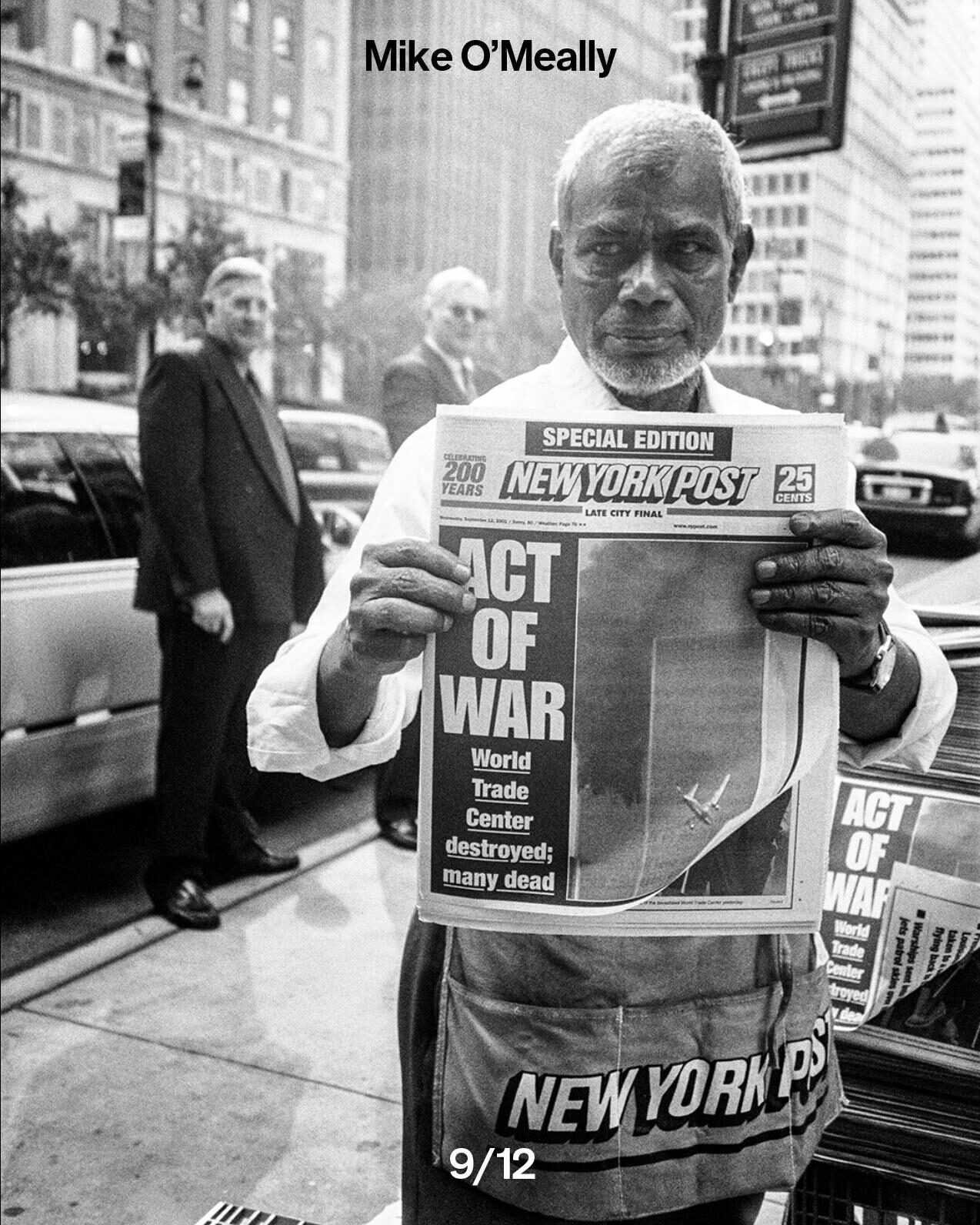
When thinking of some of the most iconic skate photos of the 2000s, it doesn’t take long to come up with an image by Mike O’Meally. O’Meally has yet to do a big glossy retrospective book encompassing his work, but in going through his archives, he had a different idea. After a 2018 photo show of symbolic imagery from his skate travels – where O’Meally donated profits to the FDNY’s Fire Family Transport Foundation – he decided he wanted to give back more to New York City, a place that helped grow his career and connection to the skate world. Mike had shot six rolls on September 12th, 2001 and thought there might be something there.
It turned into the book 9/12. Mike O’Meally had flown into New York City on September 10, 2001, and he was around to go skating on the open, empty streets of the stunned city on the day after 9/11. The six rolls he snapped that day of the crew pushing around was not something he would normally do. “I wasn’t really trained to shoot that kind of stuff for skating,” he told me. “You could waste a lot of film if you shot pushing down the street every time you went skating in New York City.” But on September 12th, he did just that. Previously, some of the photos were published in the December 2001 issue of Skateboarder in an 8-page spread about the day. Now, 25 years later, we get to see more.
Mike was already familiar with Jeremy Elkin’s work from his documentary film All the Streets Are Silent, and had seen his latest book Upmost for the Highest, which was published by Super Labo, a Japanese photobook publisher founded by Yasunori Hoki. O’Meally was impressed by the book and a DM conversation with Elkin spawned into a collaboration. The result is the 64 page 9/12, featuring photographs taken on that day by O’Meally, designed and edited by Elkin.
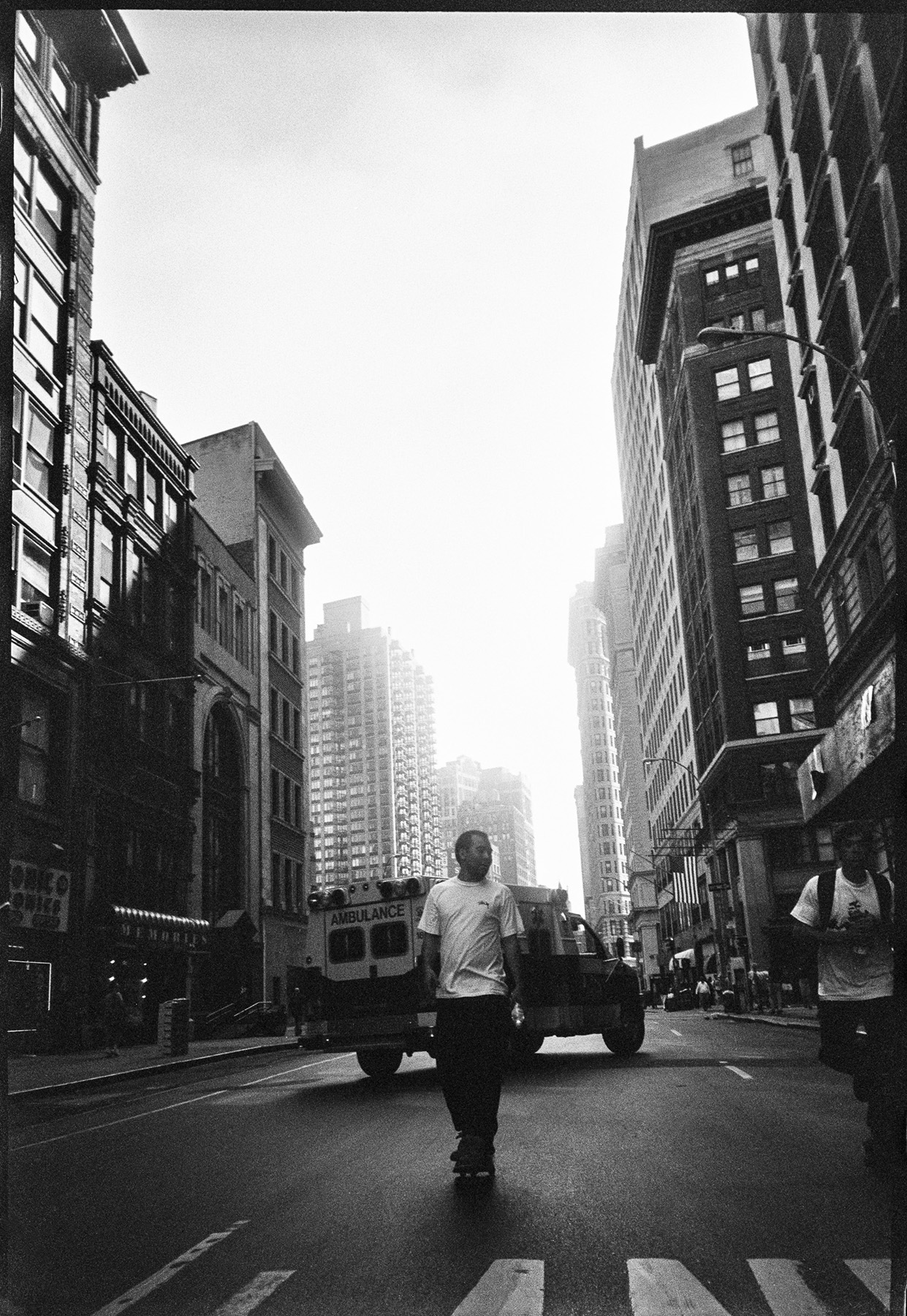
“Mike has so many epic photos in 2001,” he said, “If you look back at his work, I could have made it an all 2001 book and had a much broader narrative, but I decided to make it just this one day. I think it came out really beautiful that way.”
To represent that day, Elkin culled the images down to the most decisive moments, building a flow of motion and moments that follow O’Meally’s tracks through the day. In this narrative, the viewer is able to follow the day as experienced on-the-ground. O’Meally’s rich black and white film photographs have become a legitimate cultural artifact – a firsthand account of the aftermath. “I was told we have a diverse trauma response,” O’Meally says of the skater’s instinct to get out in the streets immediately and document what was happening.
“The message of the book is ‘how do you respond?’ When skaters fall down, they get up. I see that in New Yorkers. It’s my little gift back to the city.”
“We met up at Union Square. We skated up to Midtown. We skated back downtown to Houston, made a right to the West Side Highway and went down as far as we could and that was that. We didn’t go any further.” They tried to hit some spots, but not much serious skating got done. It is more the mood and tone of the day that they focused on. “My memory is quite foggy,” O’Meally continued, “I can see that I was there – I shot the pictures – but it’s hard to remember individual moments. I more remember the sounds and the smell and the vibes on the street. Many were scared shitless, but they were out on the streets with compassion and sharing water. You could see the bravery and all those good things that come out of people when something shitty happens.”
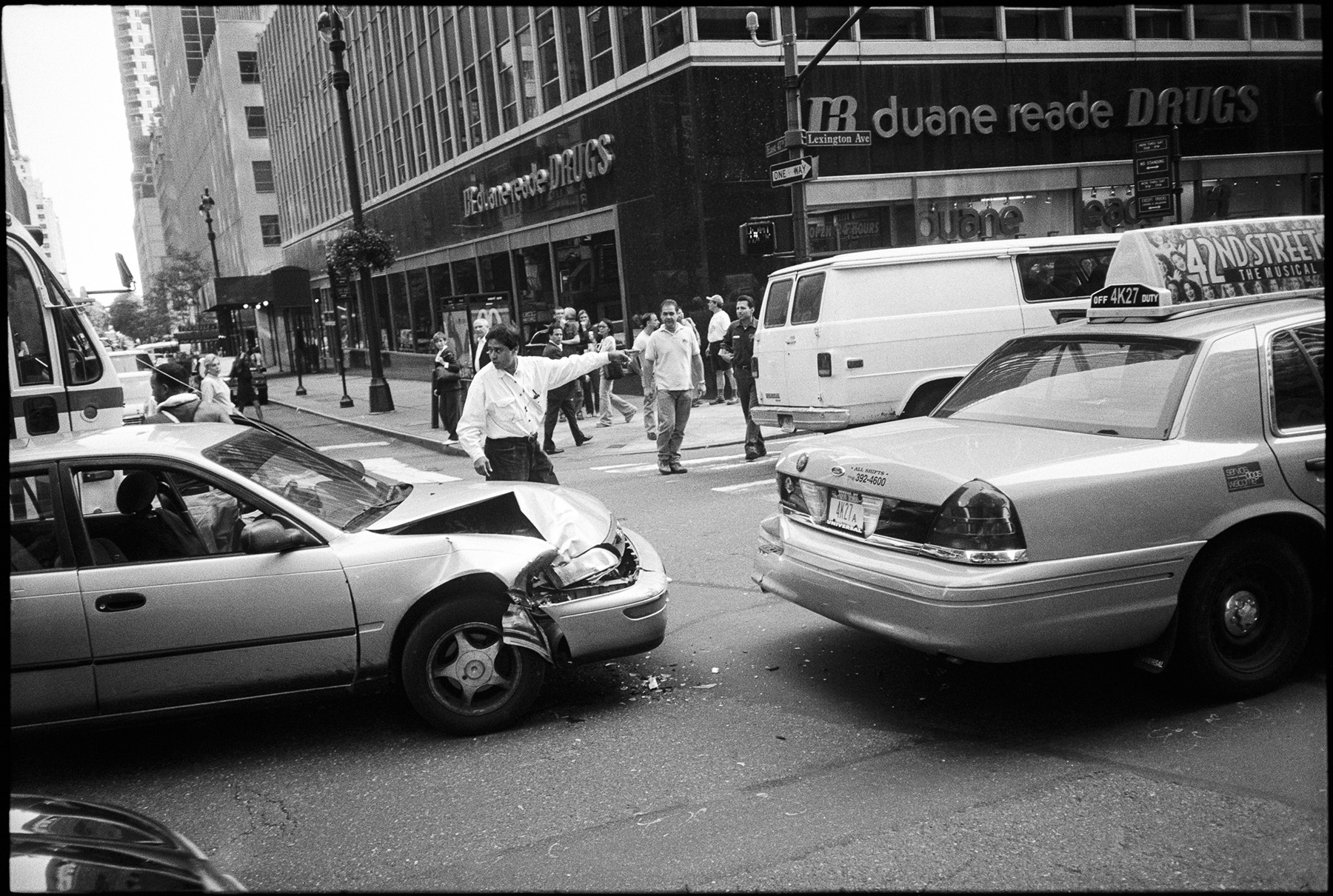
While from Montreal, Jeremy was in New York shortly after 9/11 (his mother’s family is from New York), and he recalls a familiar feeling. He was 14 and remembered the palpable fear in the streets. “We didn’t know if there was going to be another attack,” he recalls. “I remember the smell and seeing all the smoke. There was fear in everyone, but there was also resilience. You can see it all spilling from the buildings and images. Mike’s work preserves it really well.”
Thirty-three images from the six rolls of photographs that Mike took give an essential understanding of the chaos as well as the vitality, resilience, and tenacity of New Yorkers. It is clear that many of the photos included in the book had the makings of iconic images even before the crystallization effect of 9/11 occurred, and that’s what makes the flow that more engrossing. They are not just journalistic snapshots of the crew on the day after, but reveal far more anecdotal truths about the time.
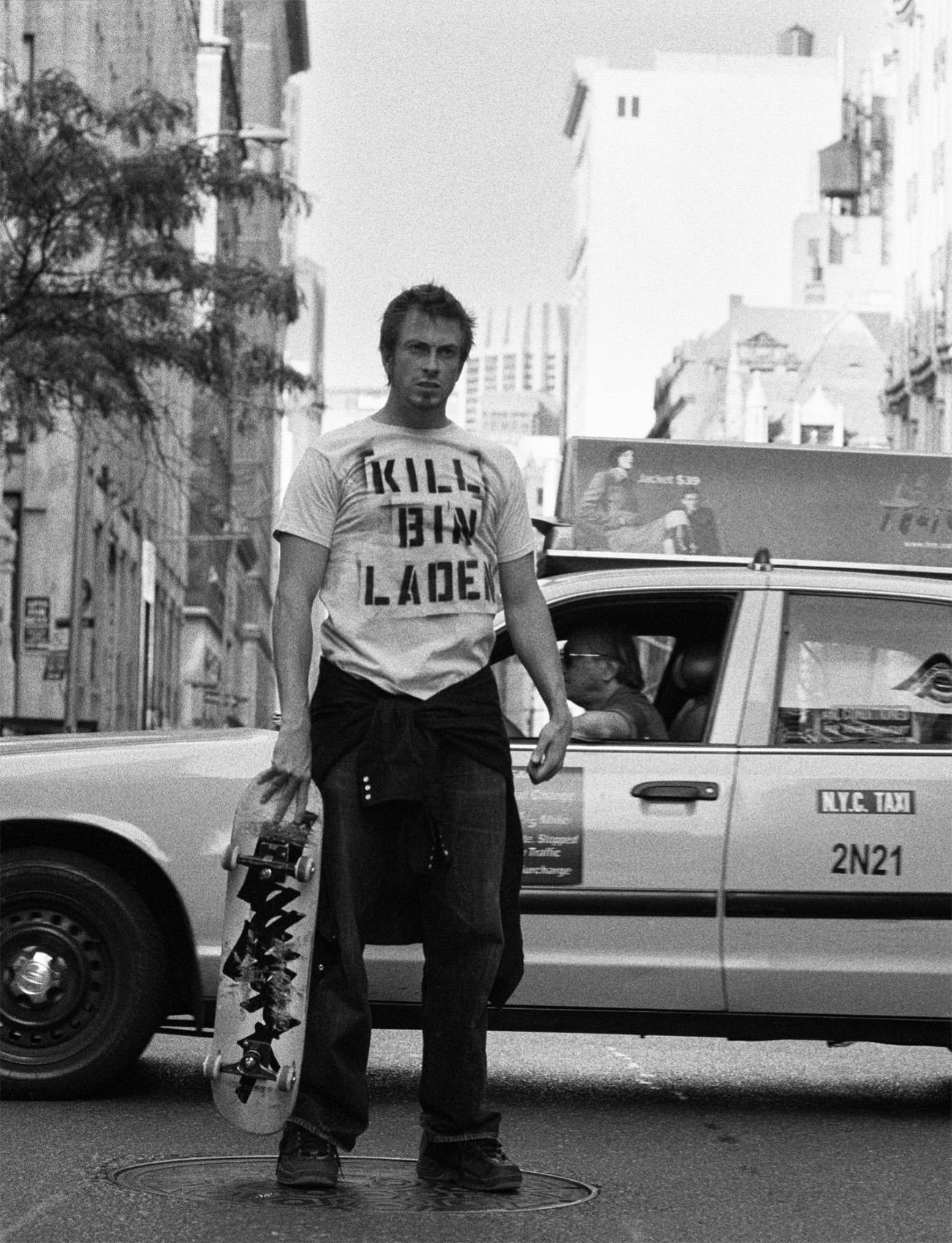
Consider the photo of Eli Gesner in the stenciled t-shirt. “There was a whole sequence of photos from that roll, but I liked that one the most,” says Elkin. “There’s a scene in this frame with the cab driver being partially visible, blocked by Eli’s posture and serious face —and the reflection of the buildings adding depth. The stencil is such a good representation of Eli’s ethos and how everything was handmade in the 90s into the 2000s.” Eli’s board also has to be a 7.4 or something.
There’s also an iconic sequence of Todd Jordan, Jeff Pang, and the gang pushing down Broadway. Close inspection of the photo reveals Todd Jordan rocking iPaths and Pang in Nikes. Soon, Todd Jordan would be one of the first New York-based teamriders on Nike’s second attempt to break into skateboarding with Nike SB, as many other sportswear brands followed suit. Pang is also pushing a longboard, something that NYC-based pros of a certain age were doing in a pre Zip Zinger world.
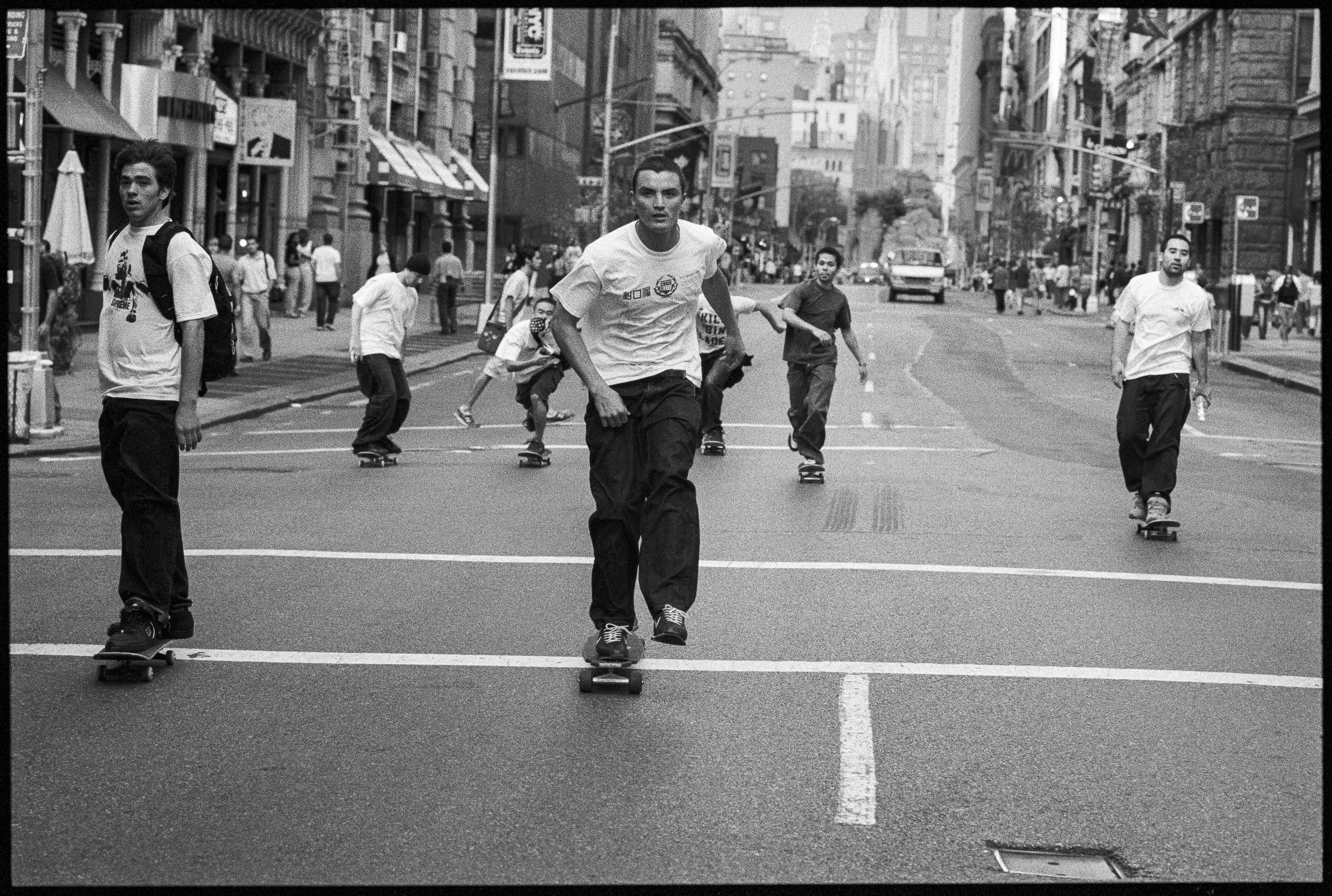
The images in 9/12 eerily recall similar ones of skaters in the streets during the COVID-19 lockdowns. One needn’t have been alive and in New York on the day after 9/11 to even relate, which hits directly on O’Meally’s representation of the resilience of the city and skateboarders themselves. “My favorite image from the whole project,” says Elkin, “is the one of the old woman in the middle and then Eli with the ‘Kill Bin Laden’ shirt talking to her. Pang is there and then Spencer is holding some sort of TRV or JVC handycam. I really wonder what that footage is like from that day. He’s holding it in most of the photos.”
9/12 is purposely not a retrospective of Mike O’Meally’s entire body of work. By focusing on a specific aspect of that body, it reveals far more about its totality than one would think. The photographic instinct and mastery on display represents a clear tip of the iceberg for a photographer like O’Meally. That he showed the restraint — further sharpened and fine-tuned by Elkin’s precise editing and design — to represent such a specific time shows huge respect to his audience as well as subject, namely: New York City. “In retrospect, I’m just happy I did that and I took those photos,” O’Meally recalls. “I can’t say I knew they’d be used for anything – I know people say that all the time. I’m happy they [were]. The message of the book is ‘how do you respond?’ When skaters fall down, they get up. I see that in New Yorkers. It’s my little gift back to the city.”
9/12 can be purchased via Super Labo. People are also encouraged to make a donation to the FDNY’s Fire Family Transport Foundation.
Related: The Oral History Of The Twin Towers In Skate Photos — Part 1, The Oral History Of The Twin Towers In Skate Photos — Part 2
Thanks for the articulate and well thought out essay- especially in comparison to the bozo takes and rhetoric that are being forced on us from every other angle. Big ups to O’Meally, the author, the Snackman, and NYC.
<3