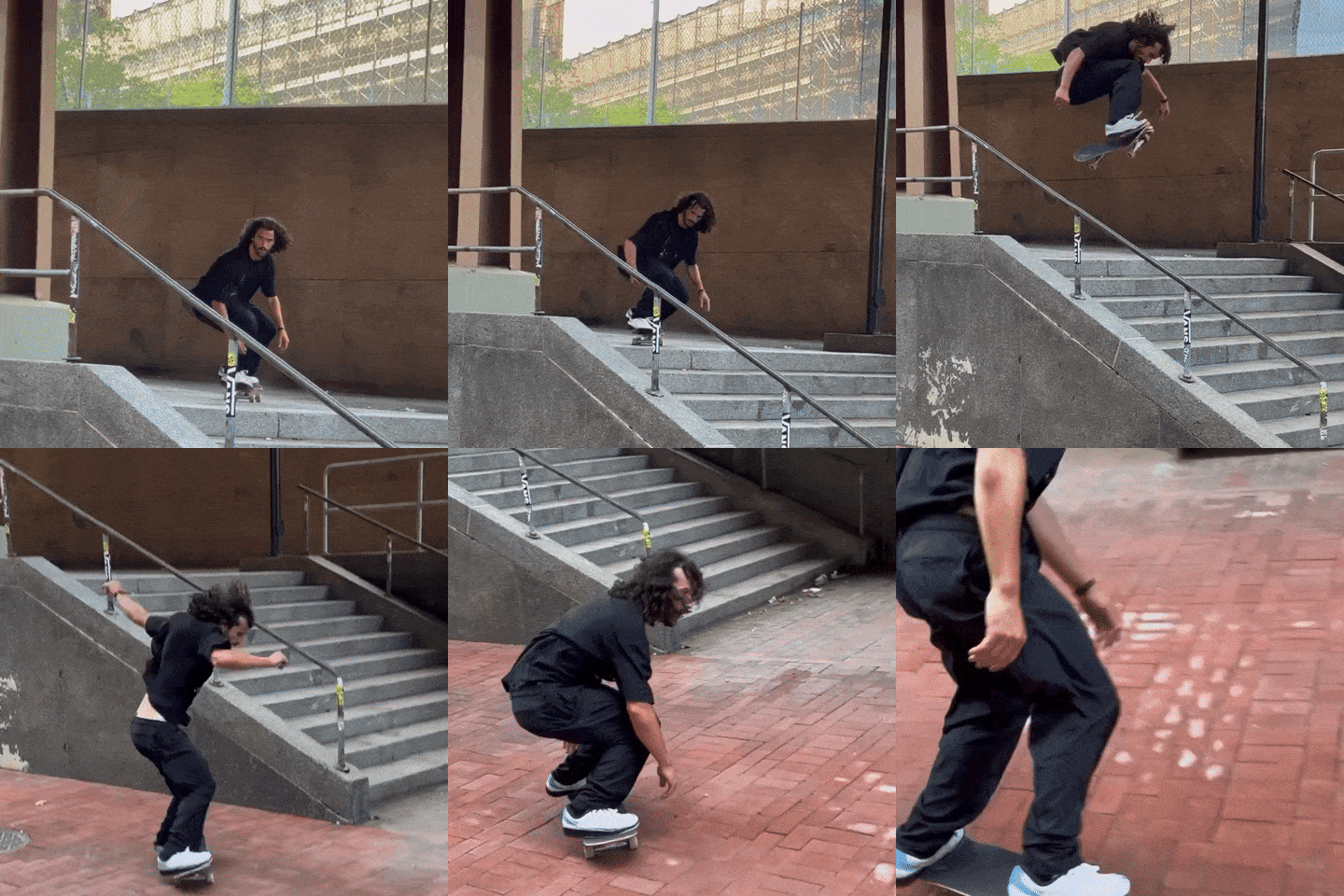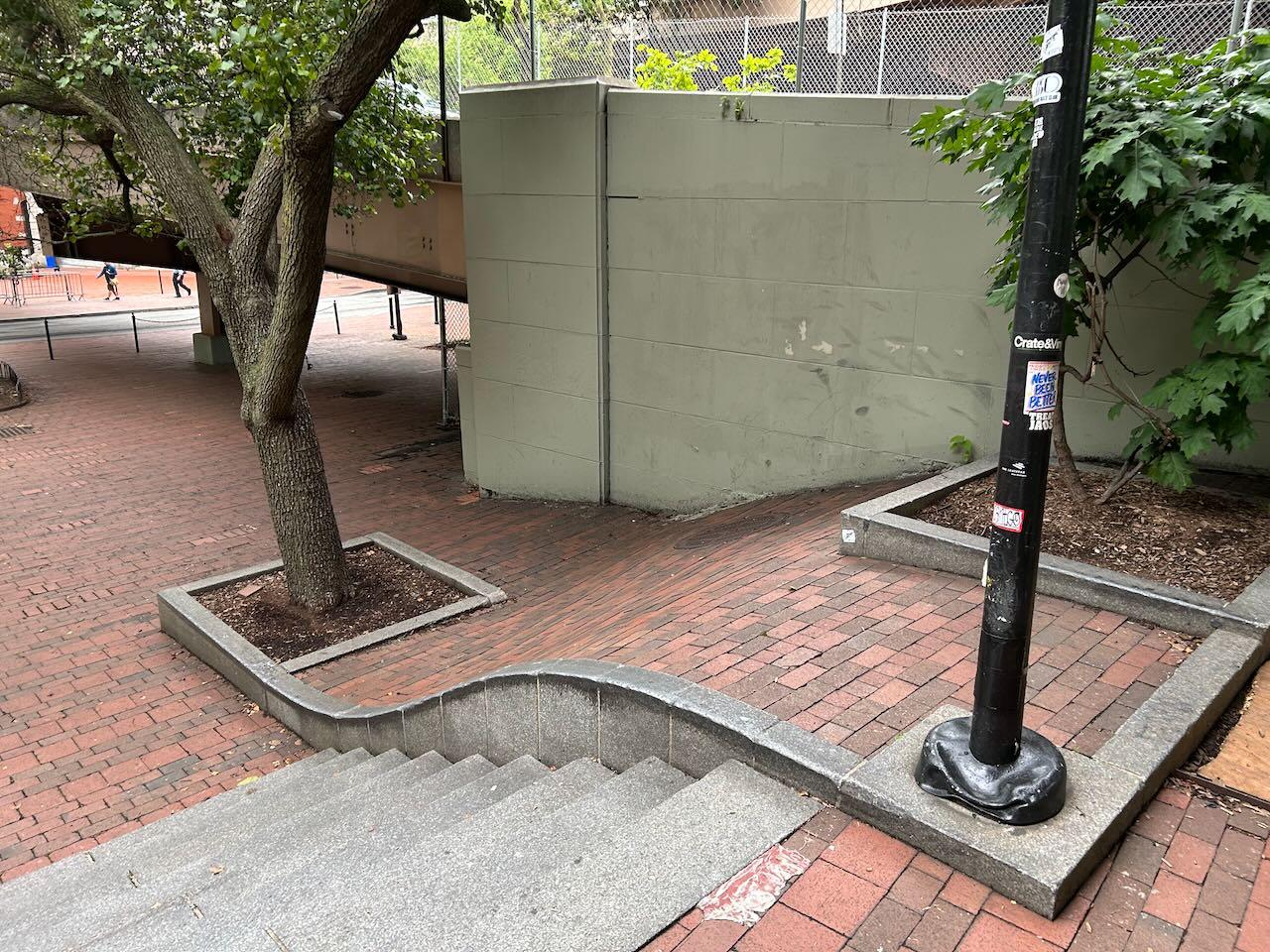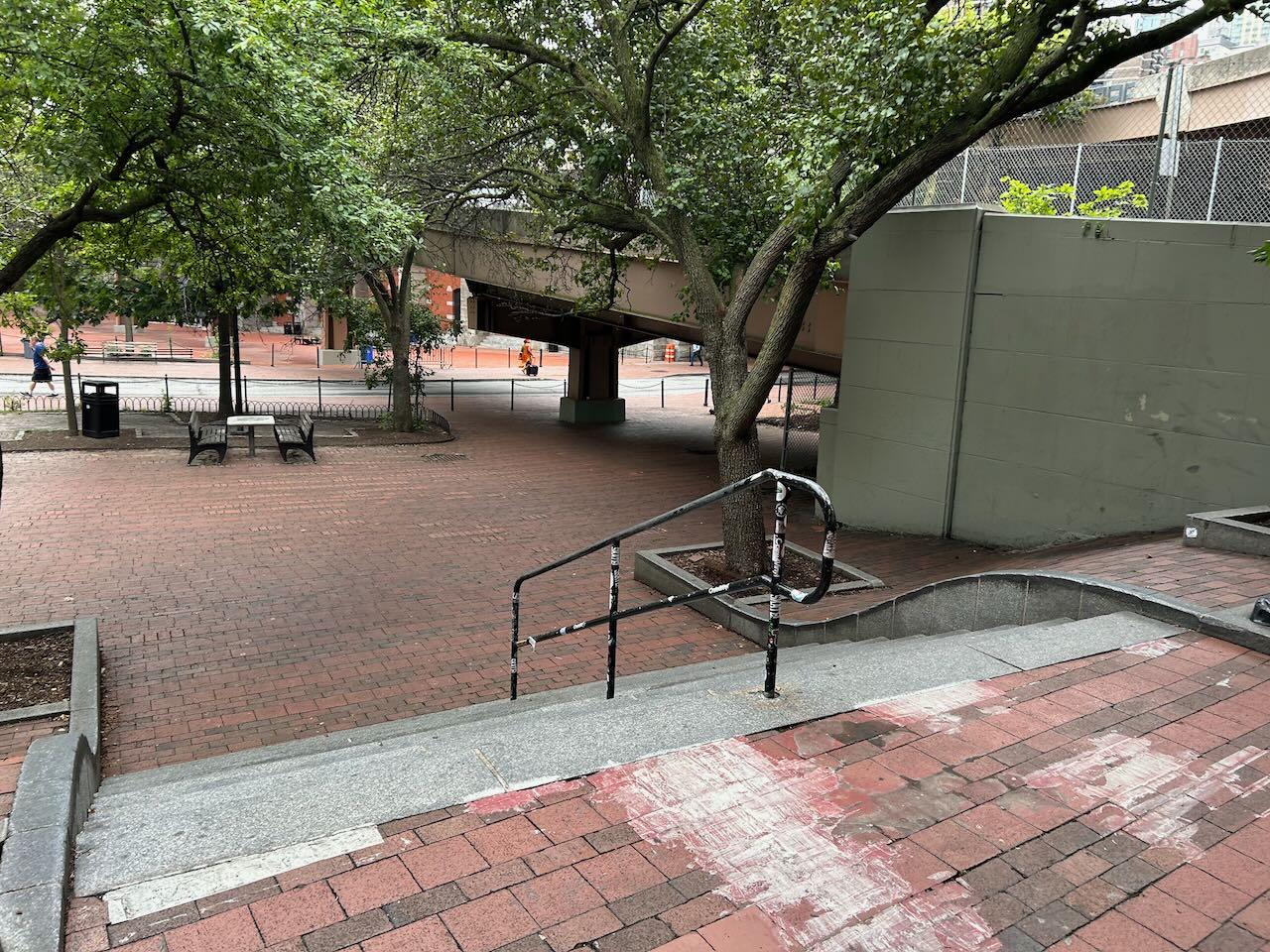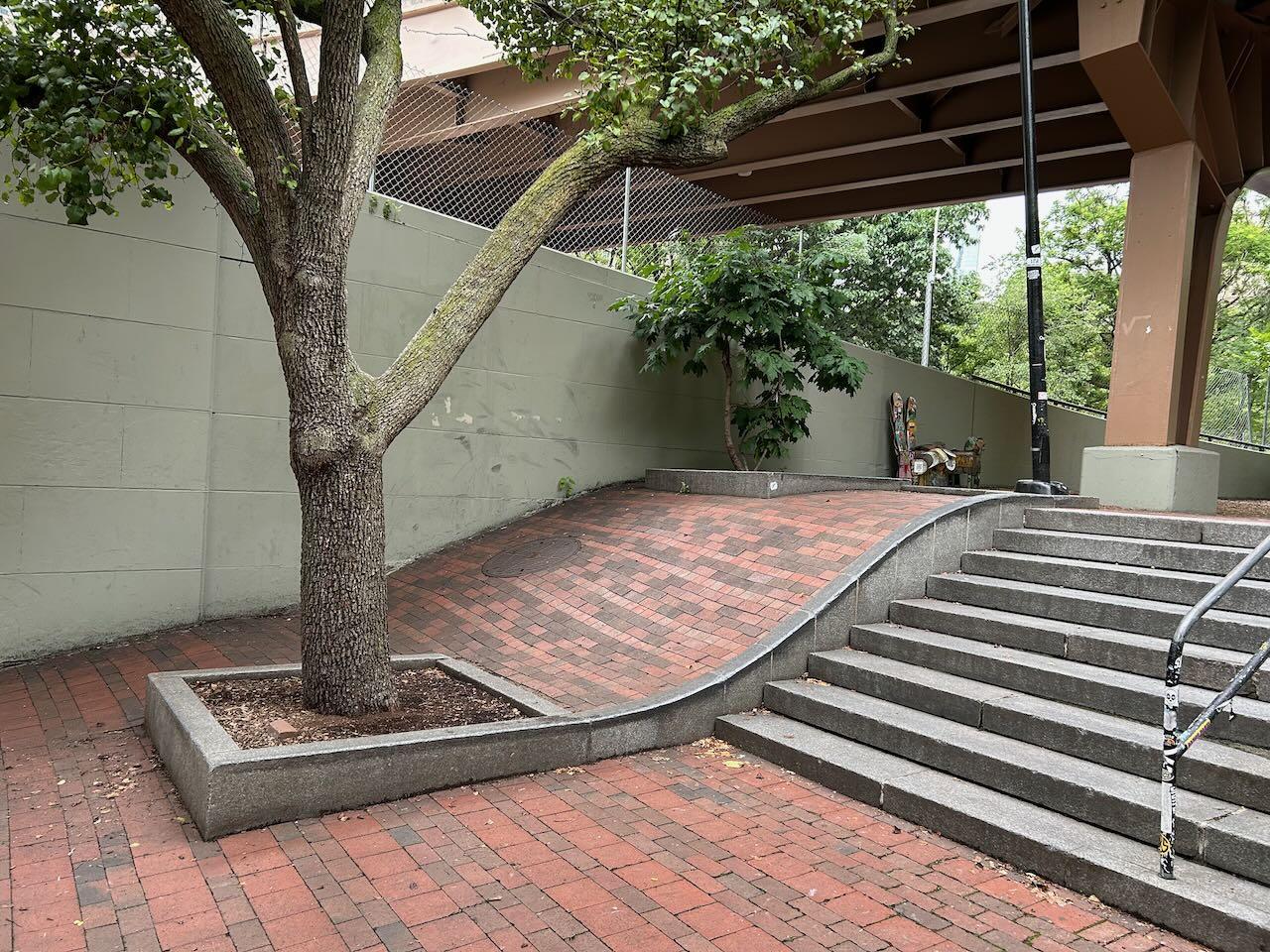





Spots: Downtown Manhattan — City Hall Area

*Update – June 22, 2010: The Brooklyn Banks have been fenced off by the Department of Transportation in order to administer repairs on the Brooklyn Bridge that are expected to be completed in 2014. There has been no official announcement in regards to the spot’s fate after the repairs on the bridge have been completed.
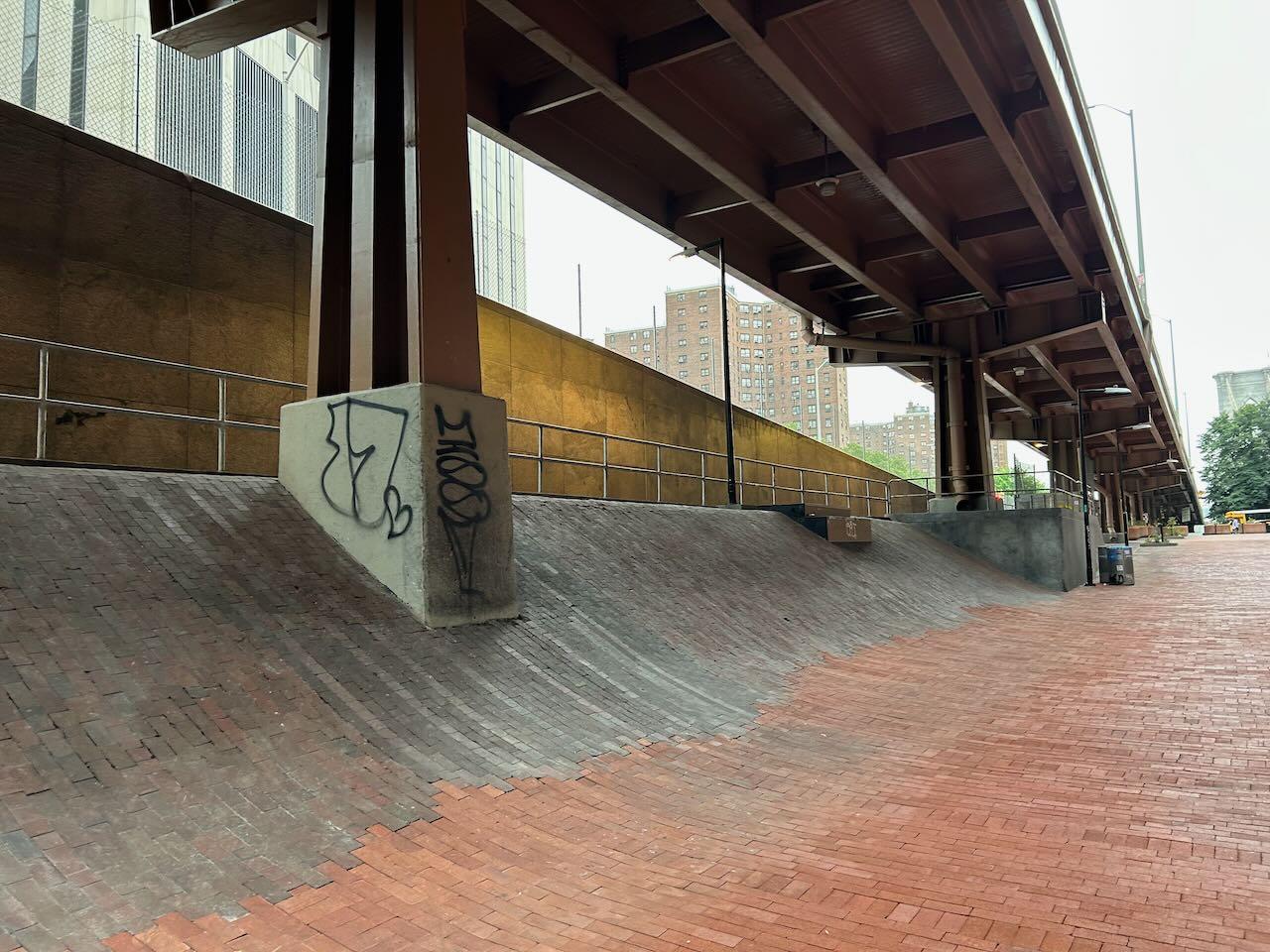
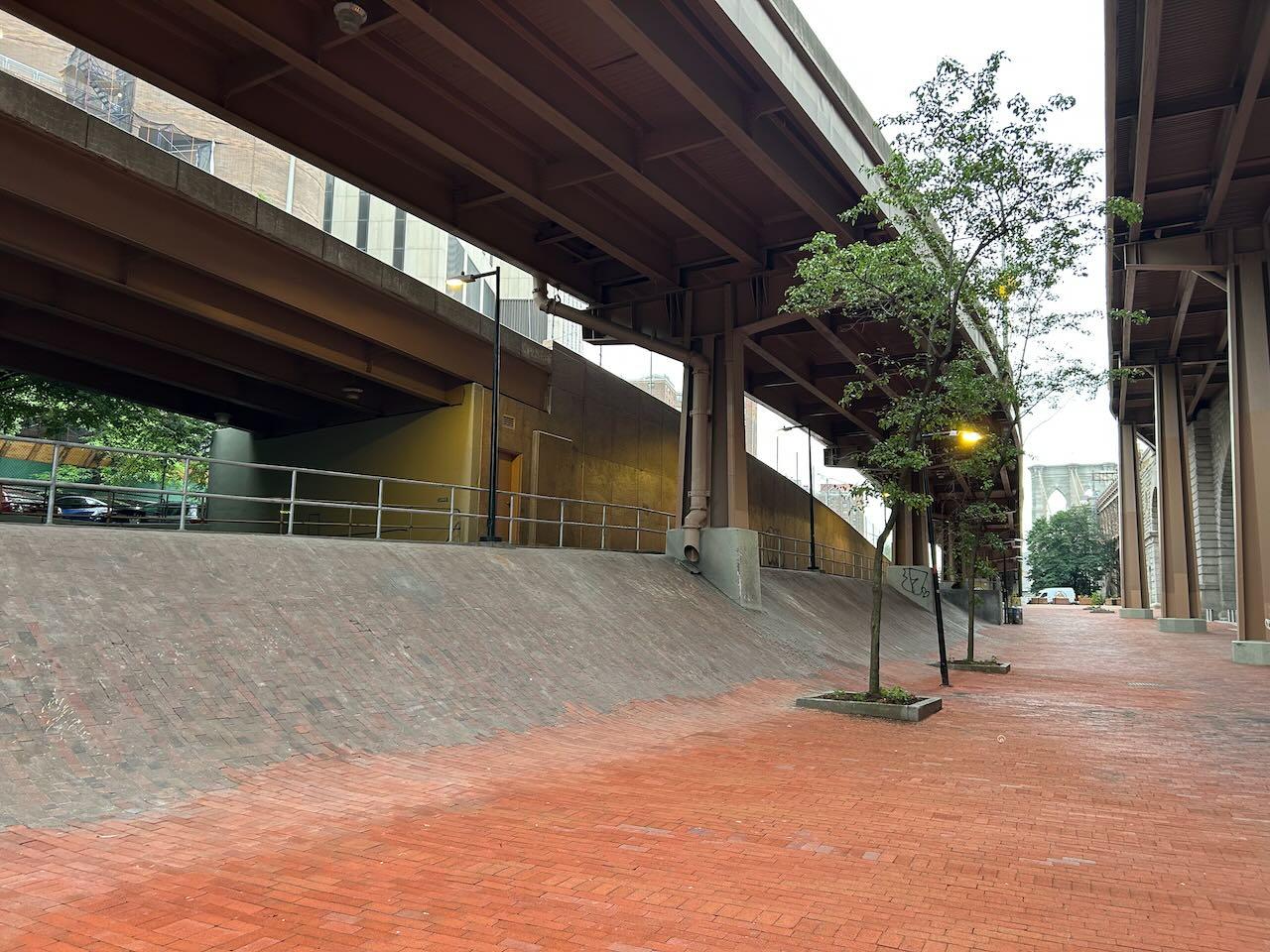
Spot: There is hardly an architectural marvel in the world of skateboarding that rivals the Banks in terms of accessibility. While Love Park, Pulaski Park, the Santa Monica Court House, and countless Barcelona ledge spots are similar in that they are dominantly made up of benches and planters that we adopt for our own purposes, but otherwise have legitimate public function, its difficult to fathom the original intention of the people who designed the Banks. It is so well suited for skating that it seamlessly blended the transition by which street skateboarding left its pre-late-80s limitations that bound it to obstacles informed by skateparks and pools, into the modern day ideas of ledges and handrails, without losing any bit of its relevance amidst the transition.
A comprehensive history is nearly impossible, and frankly, not the duty of anyone who was not around for the 1980s, or at least the mid-90s, unless they had an ensemble of willing interviewees at their disposal. Given the social diaspora that enacts itself on New York skateboarders once their age begins to hover around thirty, available history will unfortunately be limited to anecdotes for however long people care to look at skateboarding with a historical lens. Those anecdotes, however, are richer and more oozing in detail of a wholly different era that will never be relived by us younger people, than the stories surrounding nearly any other possible location tied to skateboarding that one could name.
If one were to take the stories about the Banks as gospel, it would seem that the act of vibing was practically invented, let alone perfect there. The Banks of the nineties still carries over a largely false notion regarding the attitudes of modern day New York skateboarders, who are occasionally cast in an unfavorable shadow forged by their significantly less-friendlier and more outsider-weary ancestors of the fifteen years past. Never has one location so ruthlessly churned out testimonials of board jackings and fights with nonchalance as this one has (well, Embarcadero.) And no location has ever made legends of its residents through the association of them only filming only on stolen boards (and only in a pair of Timberlands, for that matter.)
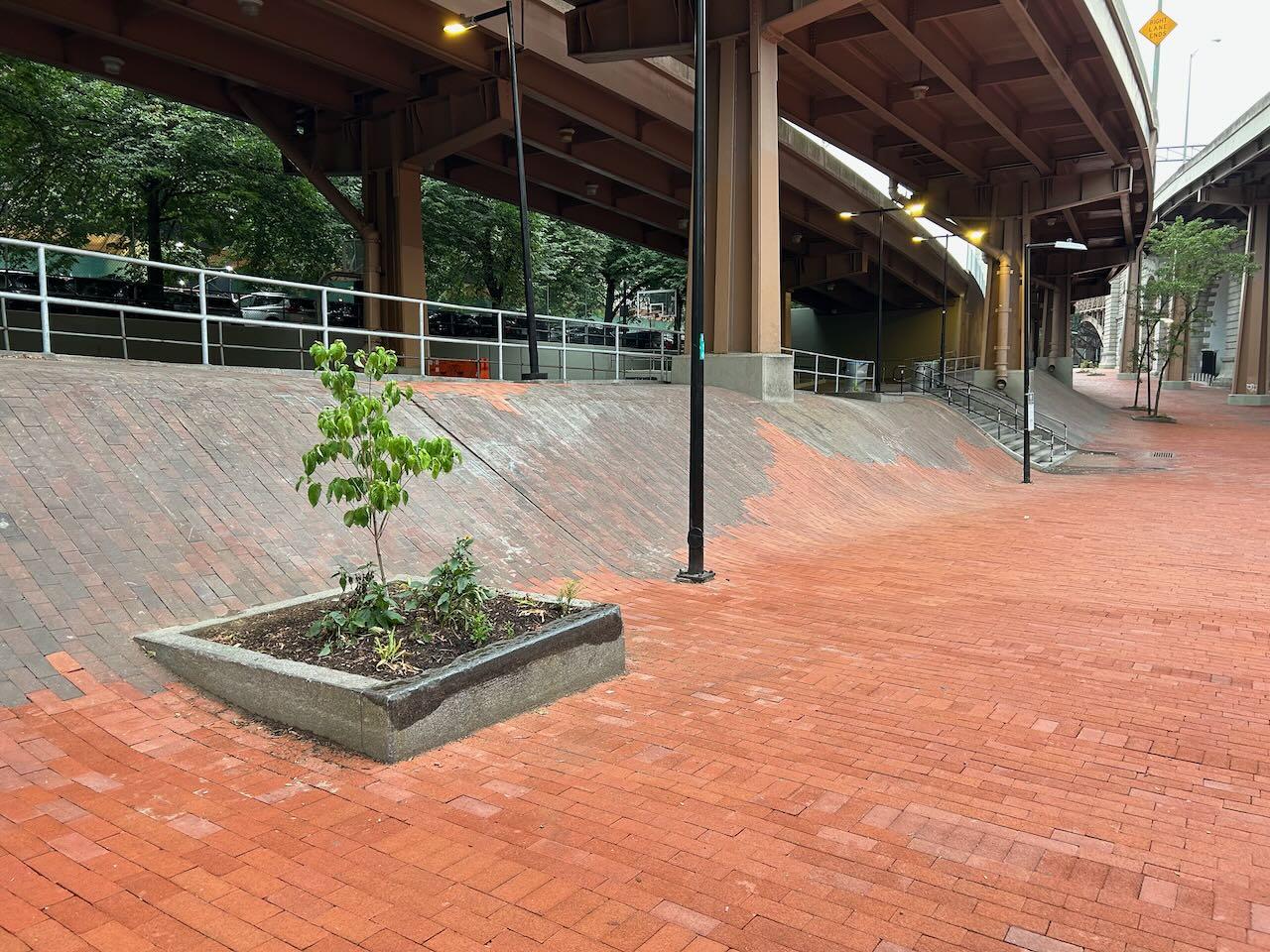
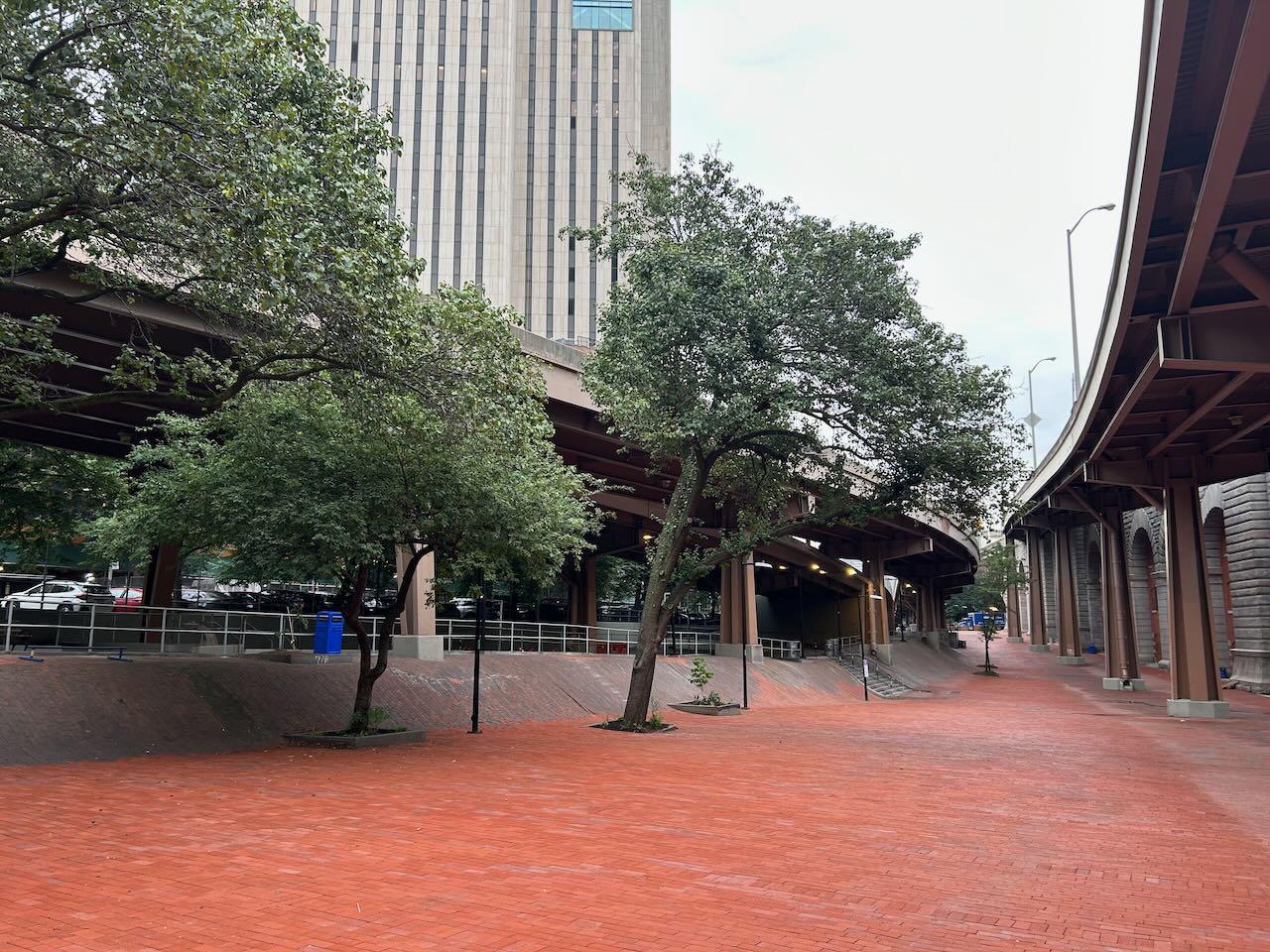
The Banks of today exist more as an artifact than they do as a mainstay in the routine of the city’s skateboarders. It has predominately become a spot for BMXers, as skateboarders typically only stop there when they have specific intentions of filming or attempting a particular trick. Meeting at the Banks tends to be an act of the past, and staying there for a session with a group of friends is even less common.
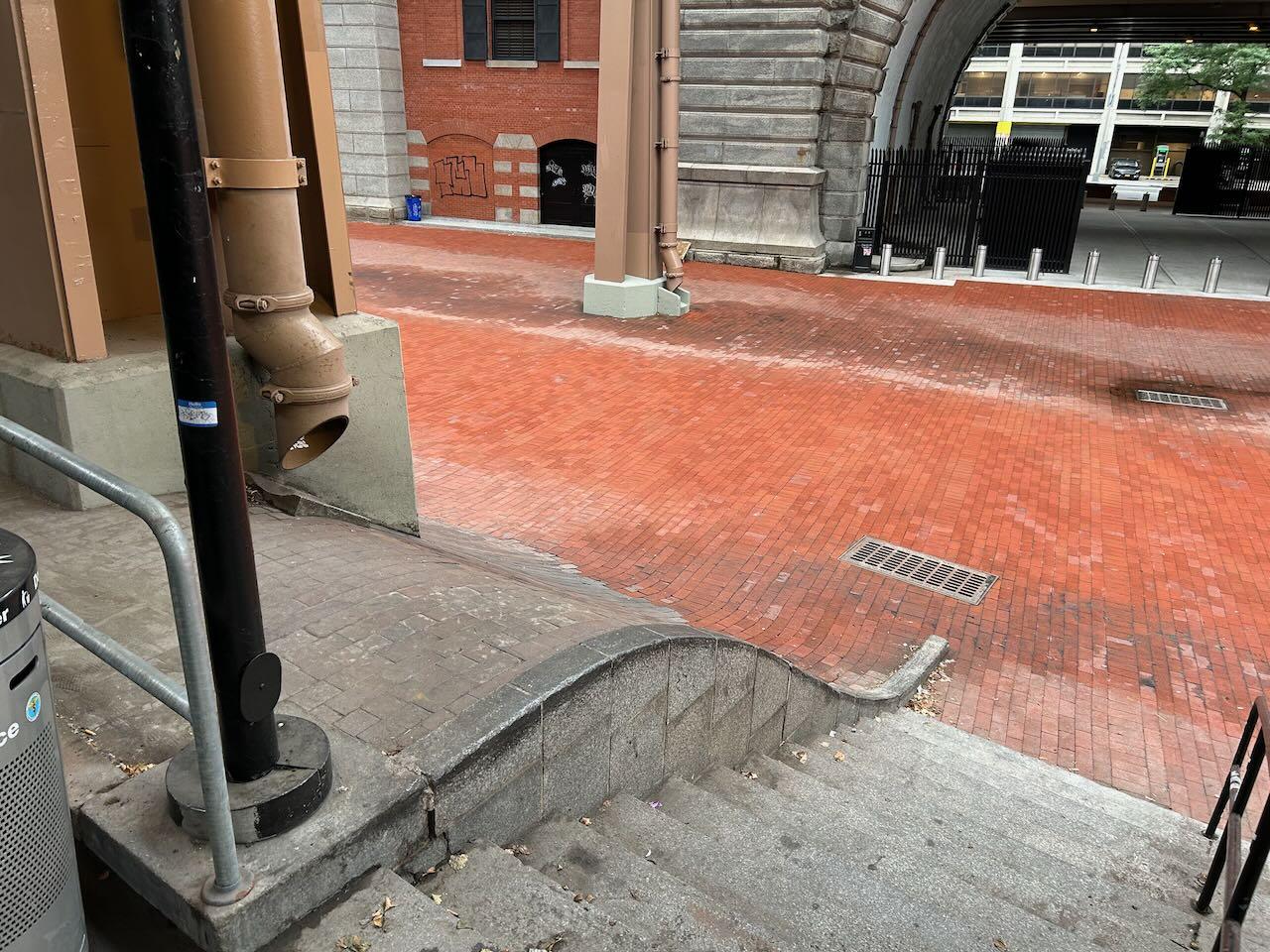
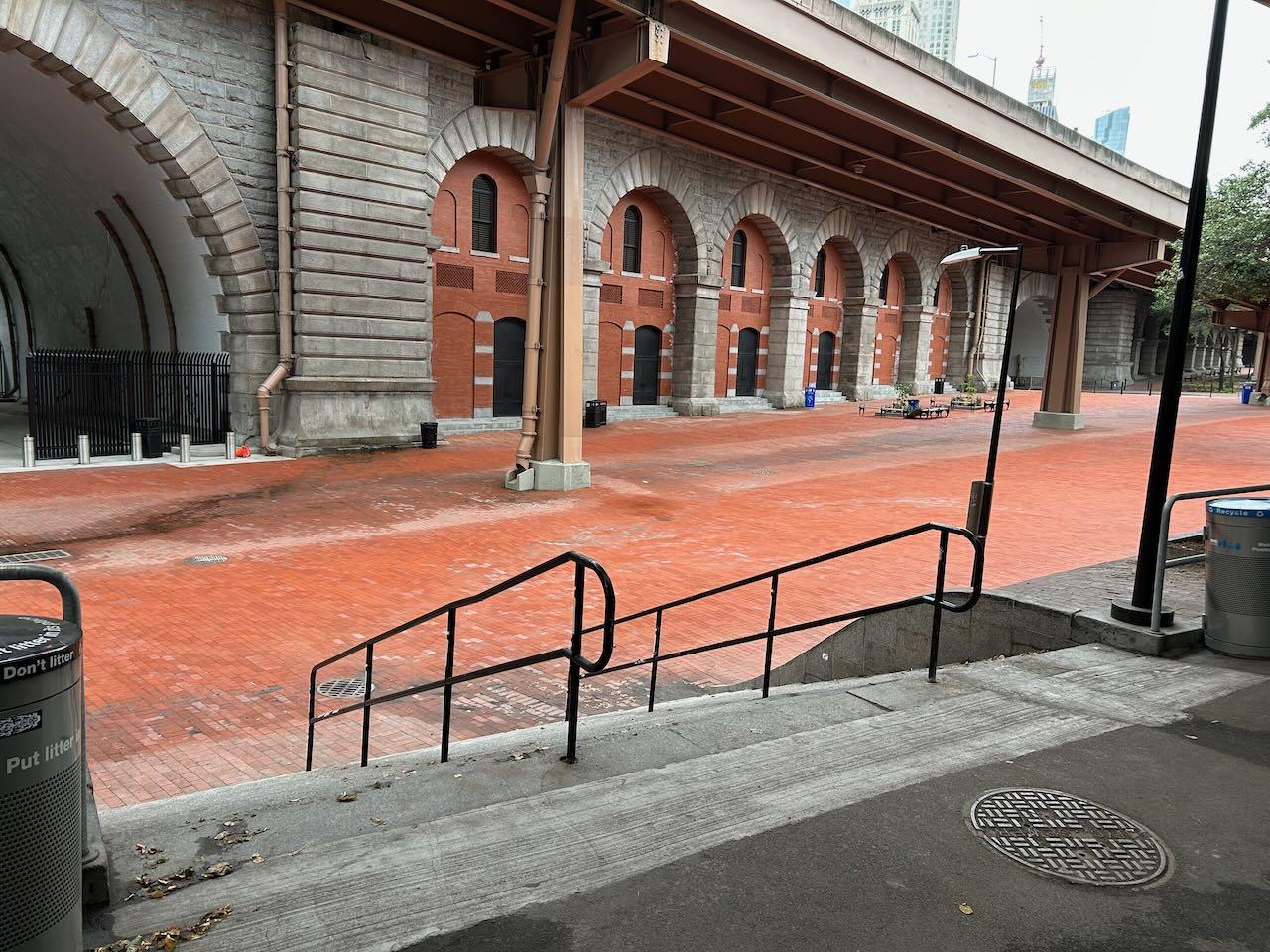
Throughout the late-90s and early-2000s, the spot underwent some skater-funded repairs and additions at the hands of Vinny Raffa and the folks at the now defunct War Effort skateboards, in the form concrete patches on the cracked portions of the little banks, and a new, square, and extremely low, nine stair rail (which was later “stolen” in the summer of 2001). Coincidentally, this is around the time when the next-door Police Plaza began re-utilizing the spot as a municipal parking lot for police vehicles, making daytime sessions at previously one of the few daytime session friendly locations in all of Lower Manhattan, impossible (the spot has always gone through low and high periods of its status as a parking lot.)
As that practice slowly began to decrease in prominence late in the summer of 2001, Al Queda flew two planes into the World Trade Center, approximately eight blocks away, which resulted in even more widespread, and stricter usage of the spot by police vehicles. This had a runoff effect in that the spot was completely clogged with cop cars and paddy wagons for years to come, not to mention the fact that all of the ledges surrounding the nine stair on Pearl Street were blockaded by police barriers.
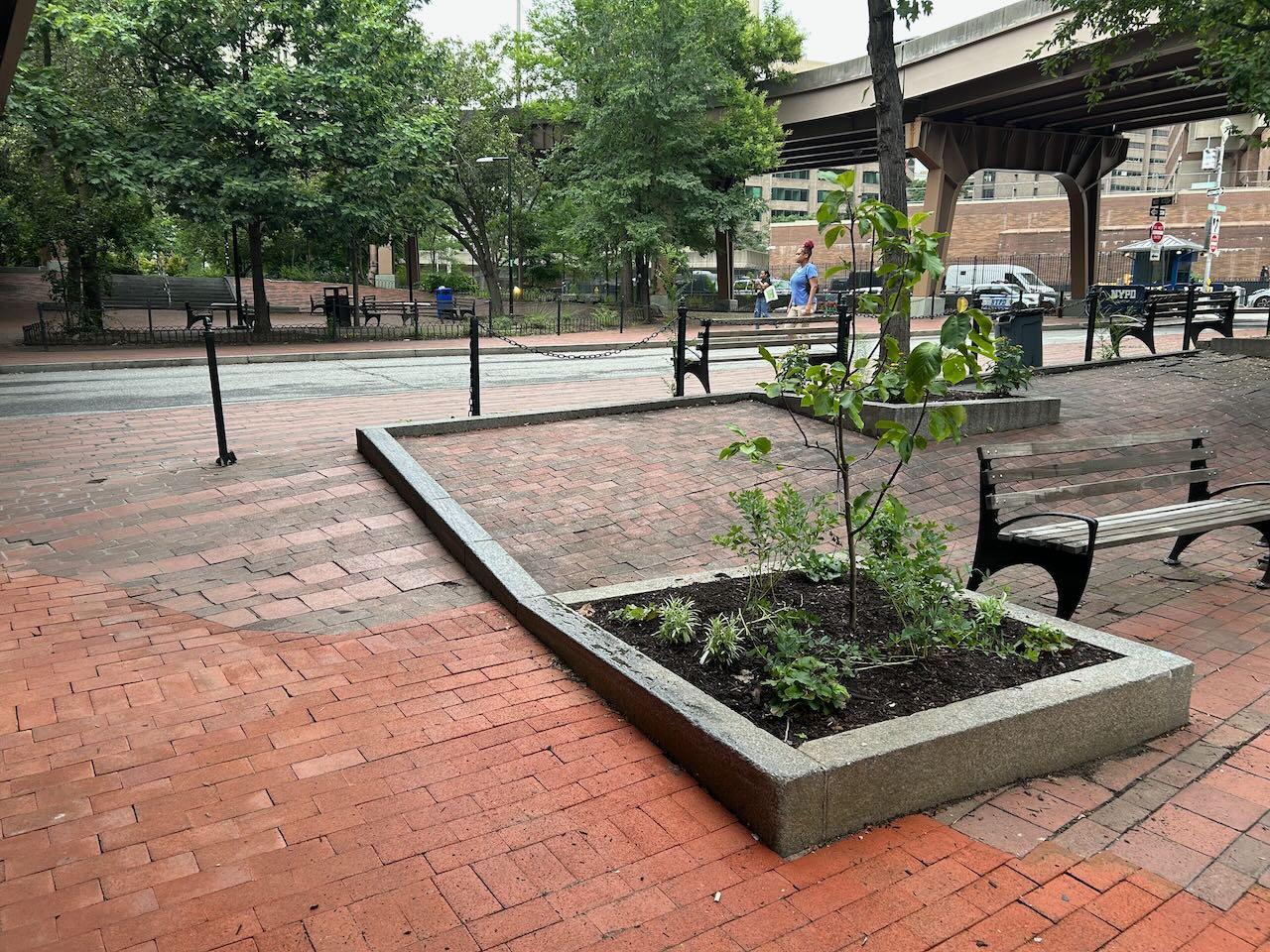
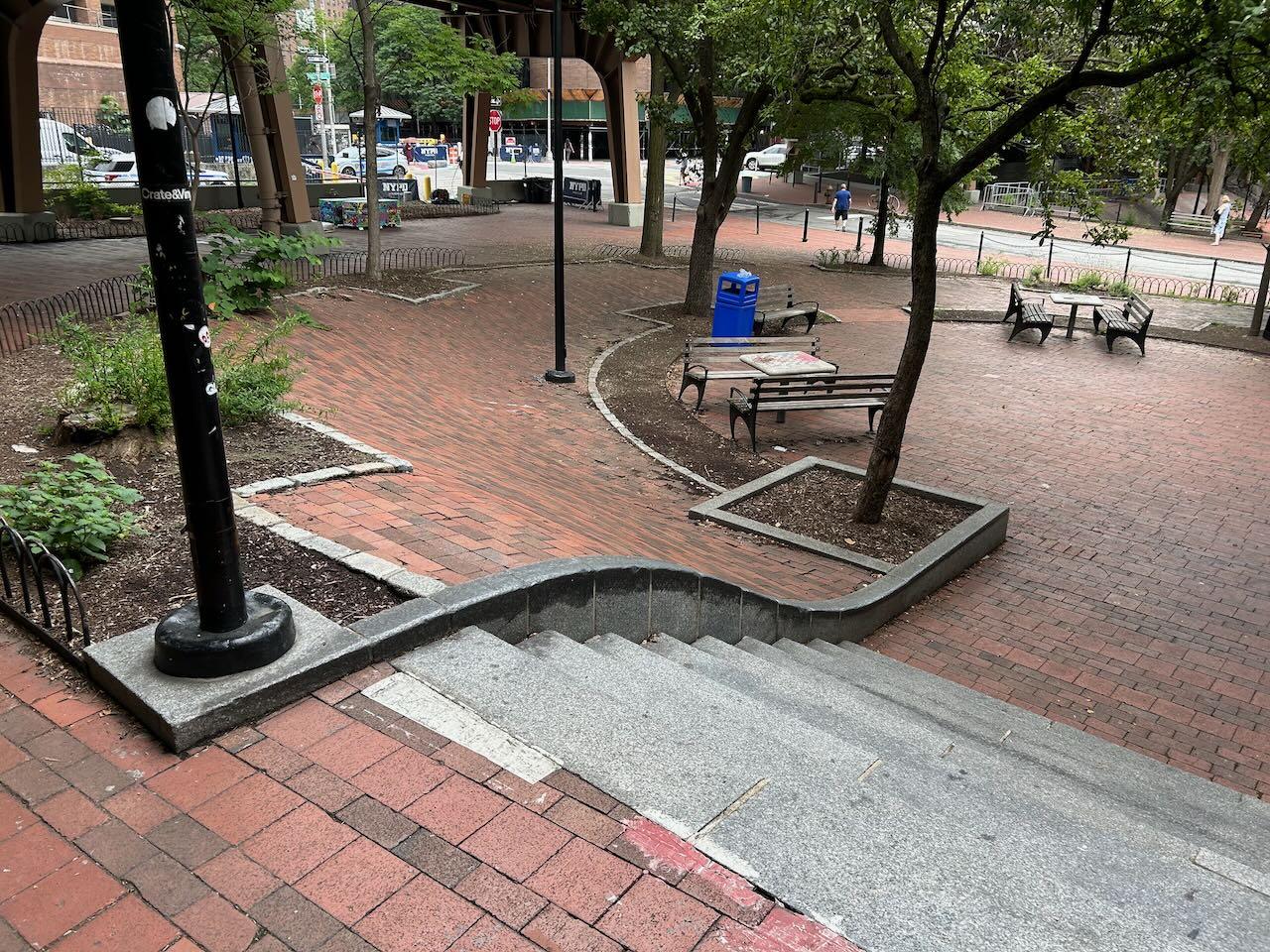
In 2004, the renovations began, just as the barriers were removed and the once oft-sessioned ledges saw light after not feeling the crust of a pair of trucks for approximately three years. They were replaced with metal chains and patches of mulch that are poorly maintained to this very day. The two ledges at the bottom of the nine stair remain, but it would be surprising if you were to ever come here and see someone attempting to actually skate them.

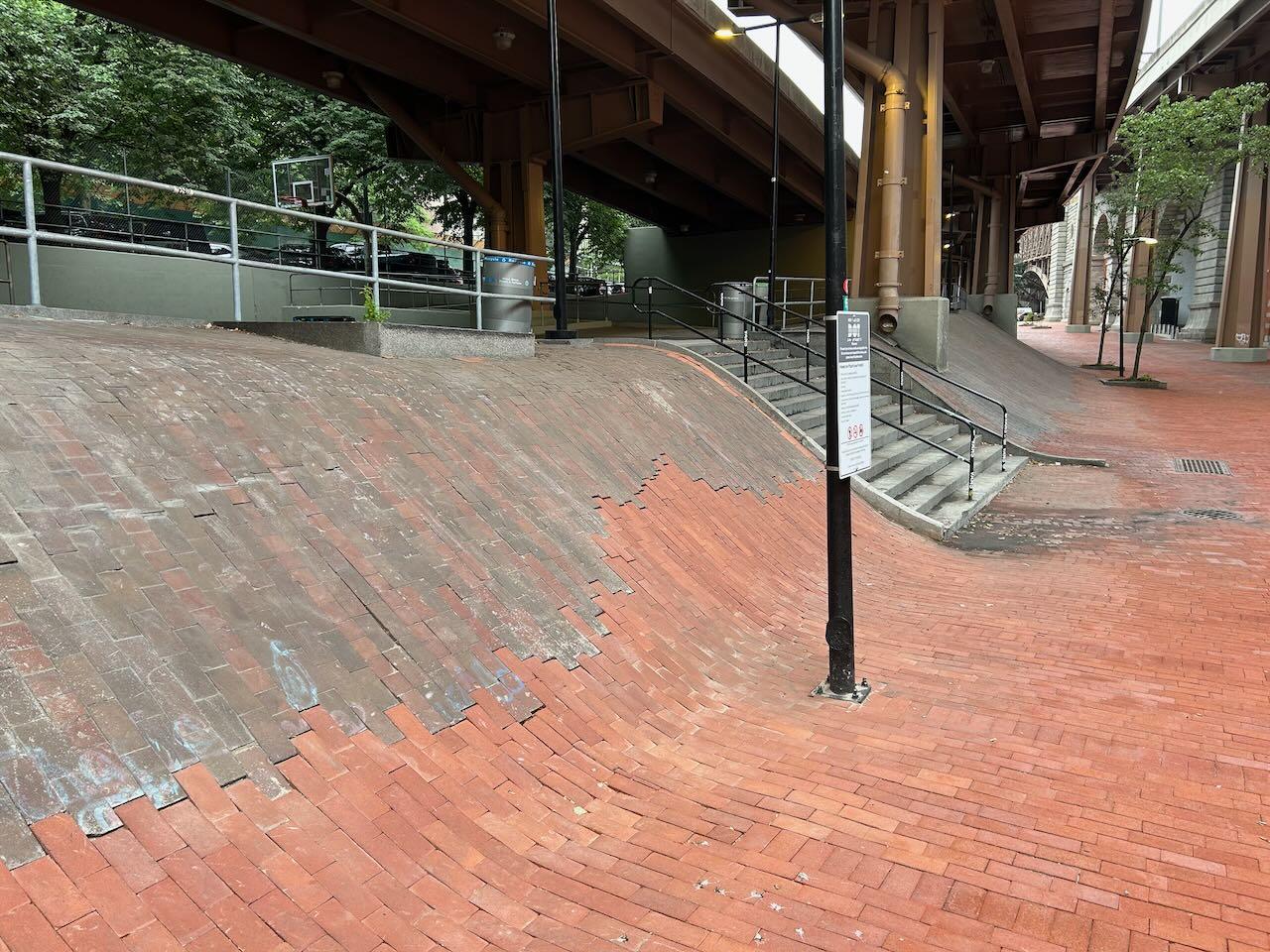
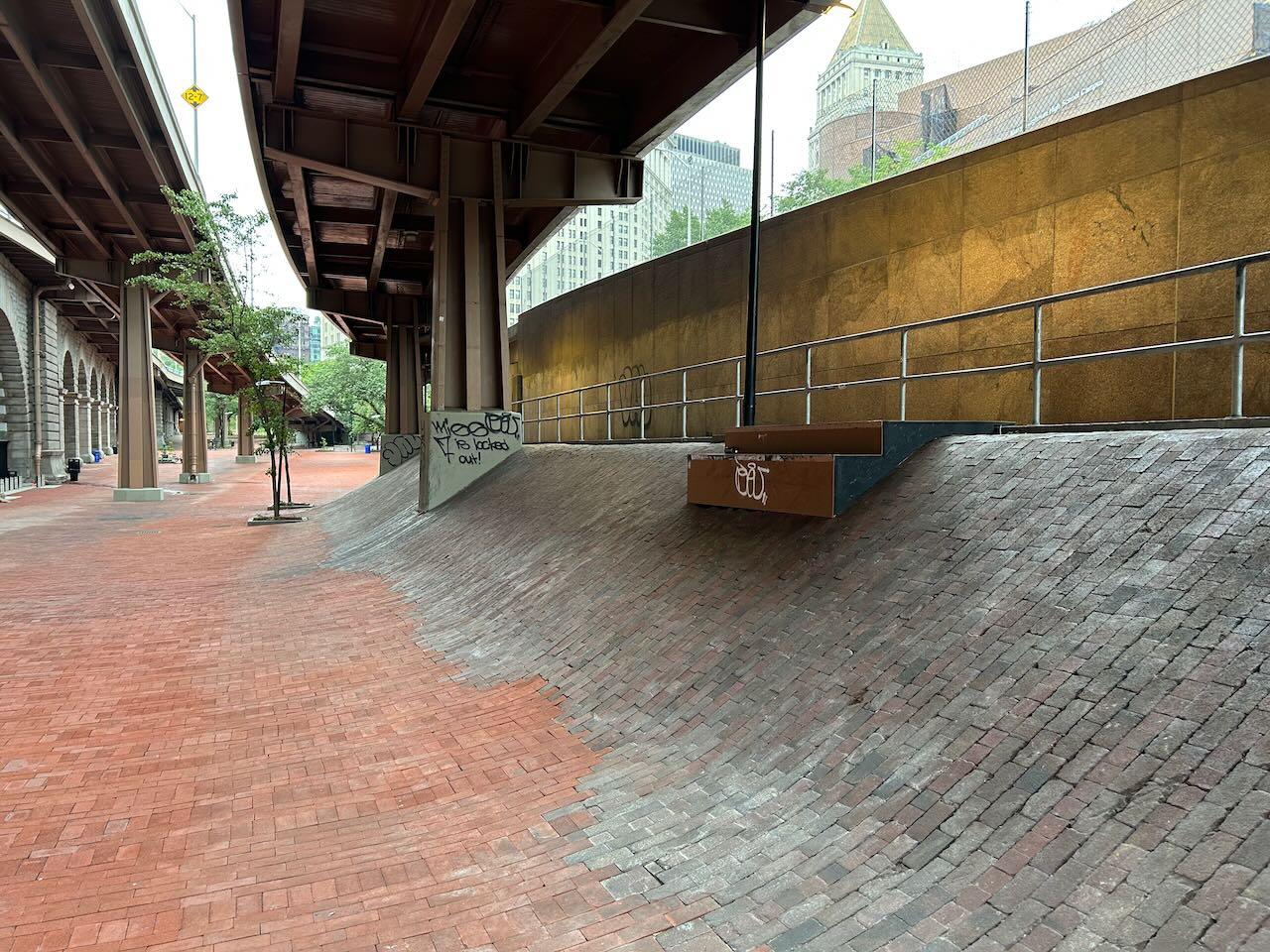
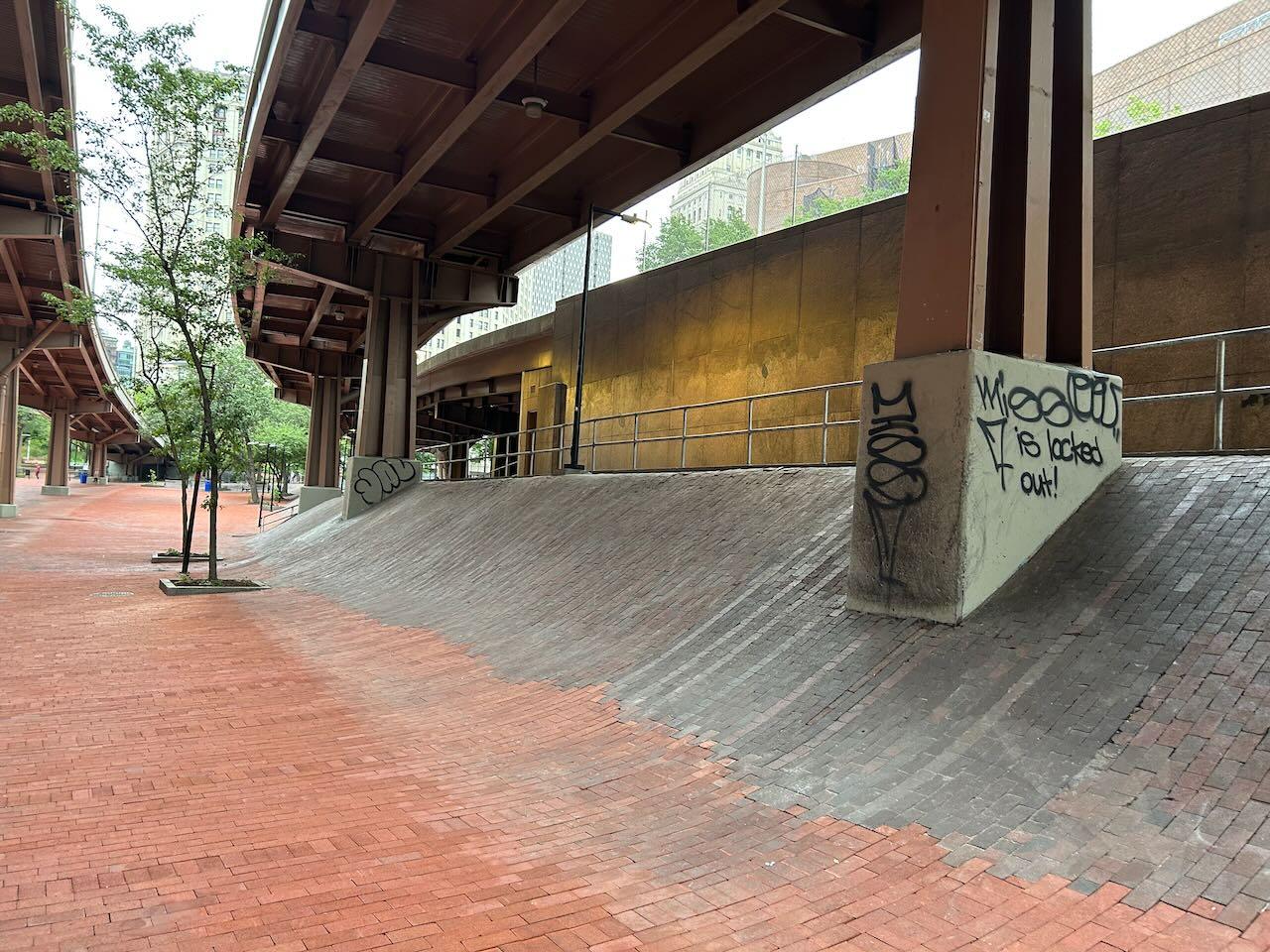
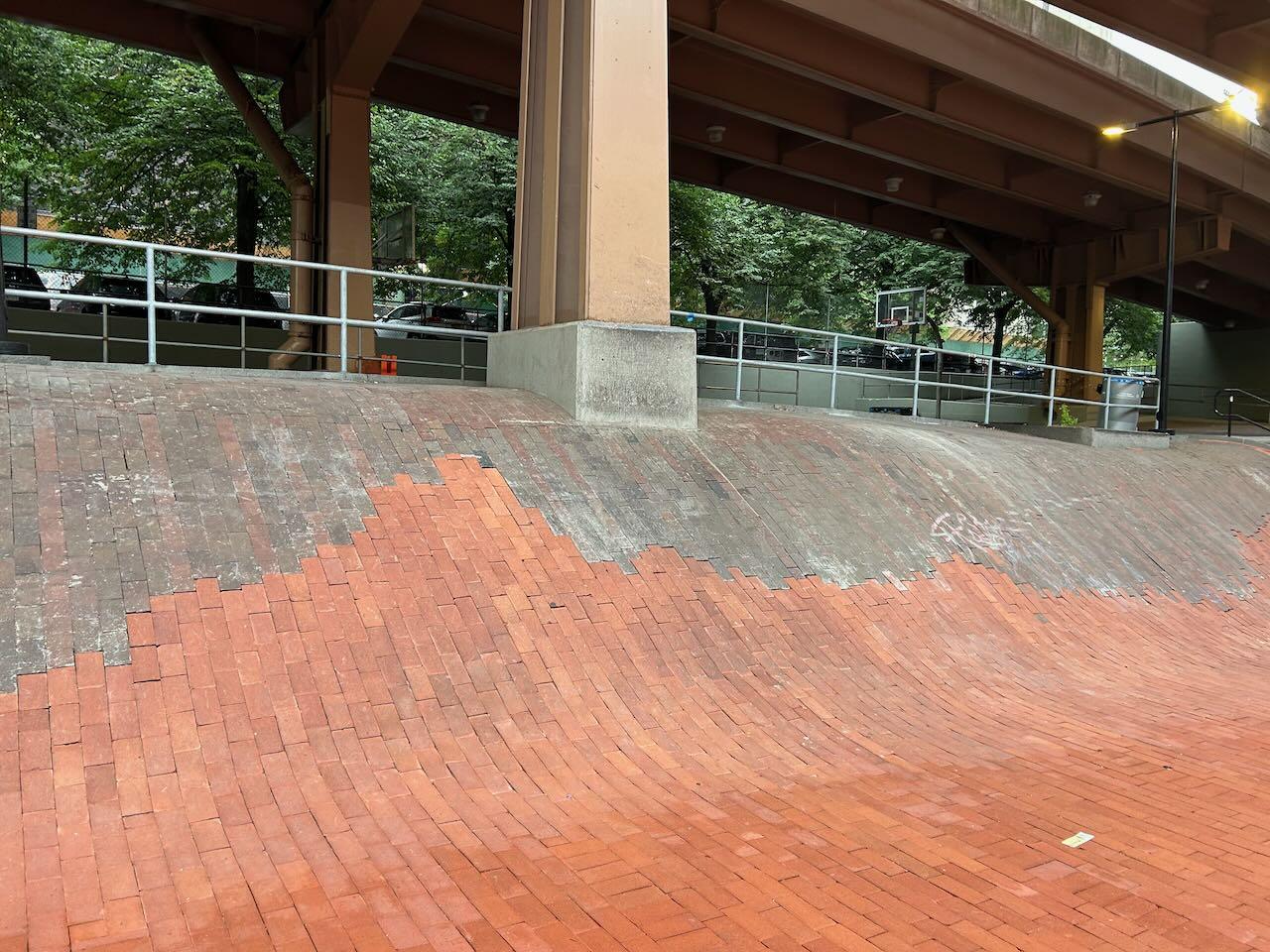
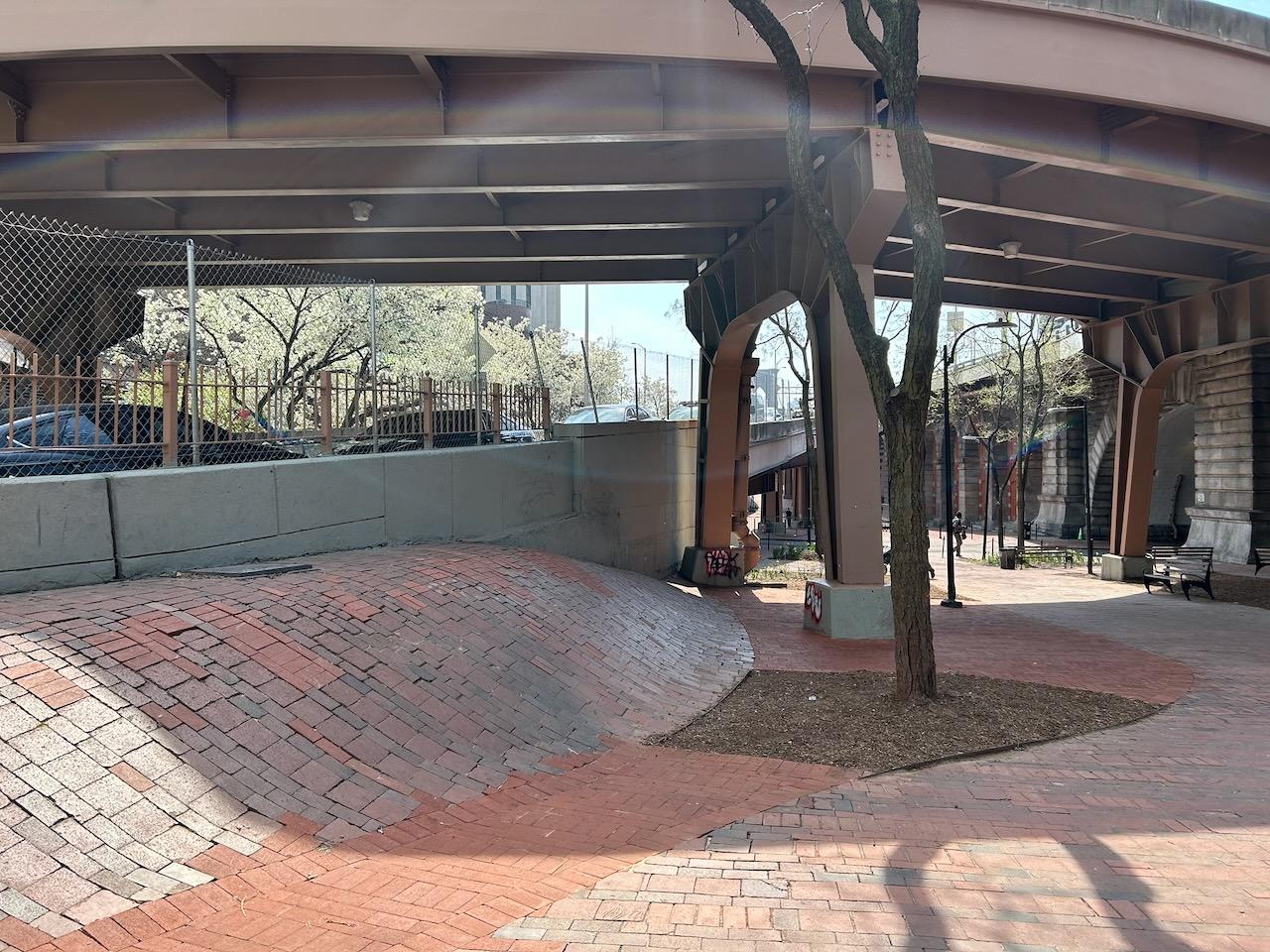
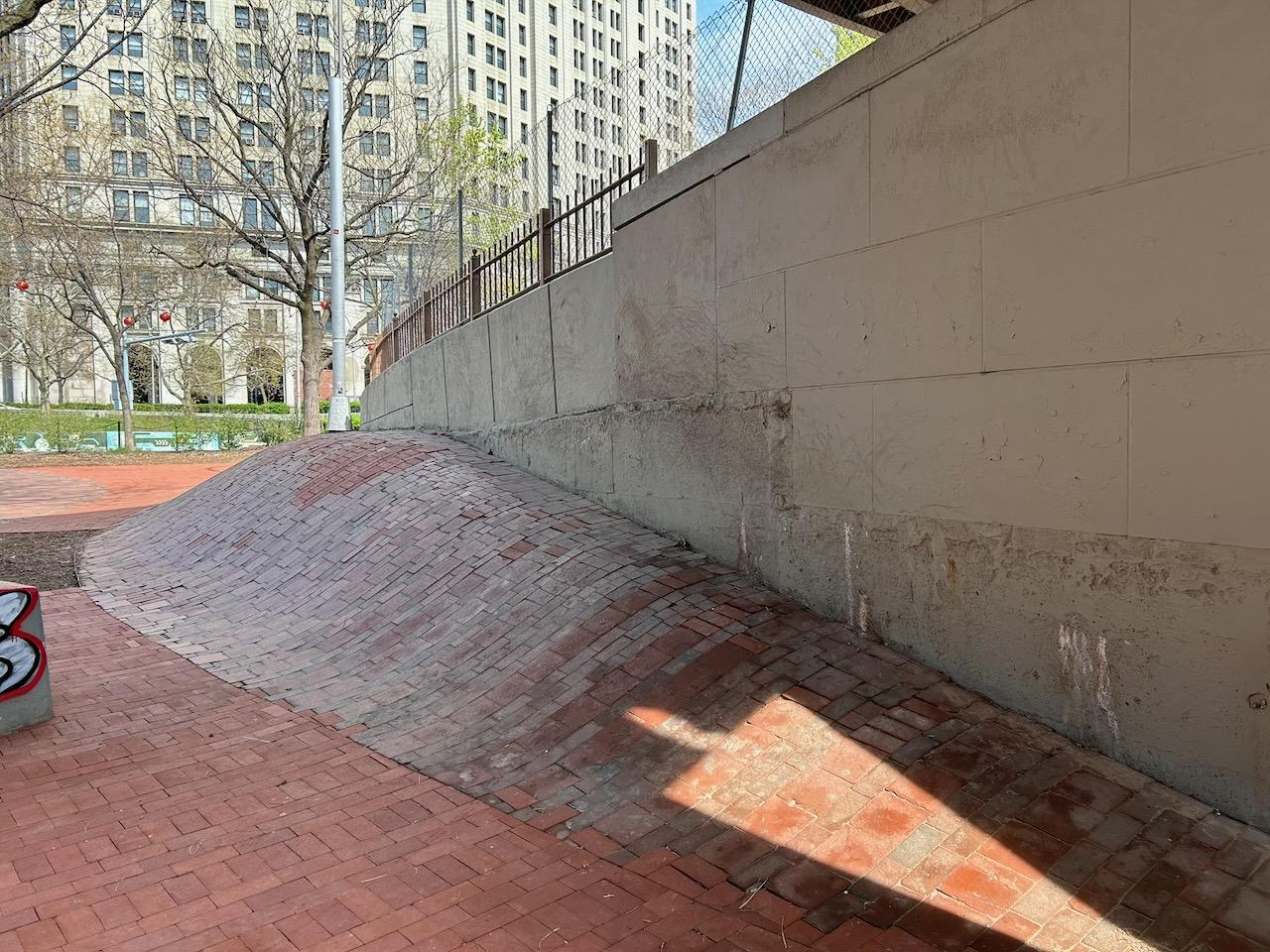
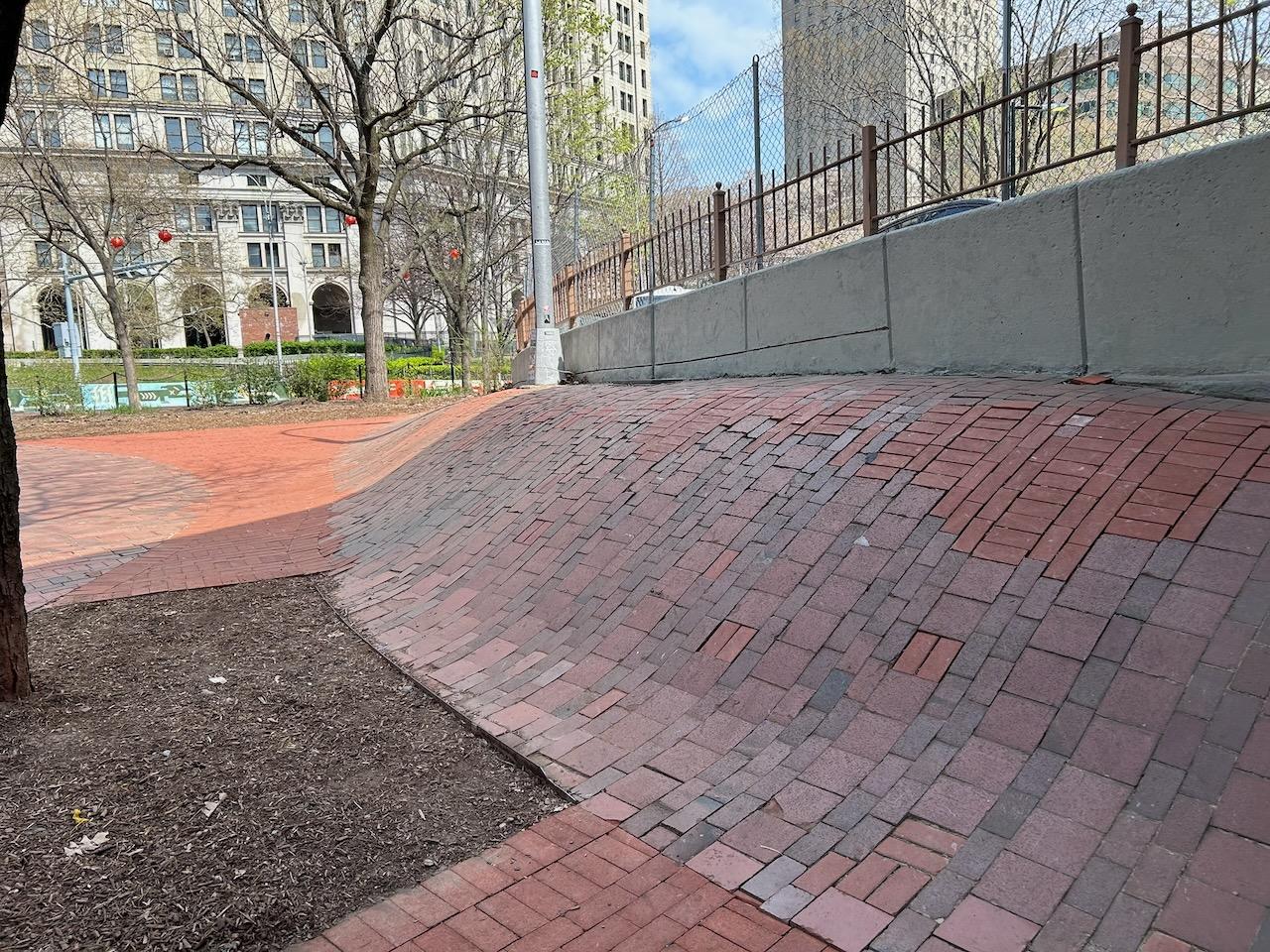
The biggest loss was obviously the small banks, which were undoubtedly the most prominent, most fun, and most iconic portion of the spot. Although the little banks lost a tad bit of their luster in the late-90s, as a large iron fence was installed on the adjacent wall to prevent skaters from launching off the ramp into a Brooklyn Bridge exit-ramp (most famously switch 360 flipped by Eric Koston in a 411 intro and switch backside heelflipped by Josh Kalis in his Sixth Sense part), it did not do too much to decrease the overall popularity of the spot as simply a bank. The story surrounding the fence’s installation typically involved someone launching into traffic and crashing into then Mayor Rudolph Guilianni’s car, which lead to an almost immediate skate-proofing of the bump-to-barrier obstacle. Whether or not that is actually true is anyone’s guess (if one were to use Tim Upson’s infamous nollie in the 411 New York City metrospective as an indicator, where he lands and proceeds to crash into a car, only to yell out “Back up!” as his board remains stuck under the vehicle’s wheel, the spot’s existence for an additional ten years would have invariably resulted in at least a few deaths.)
The story surrounding the little banks’ overall demise has similar unconfirmed origins, and in turn, remains only a presumed truth for those who lament the spot’s current dilapidated state of uselessness. Accounts typically cite either the police captain’s or some sort of public works official’s (the discrepancy obviously diminishes from the possibility of this being true) office as directly looking down at the small banks from the Municipal Building, which towers above the spot from across the street. And their frustration with the plaza’s adoption by skateboarders was the invariable straw that broke the camels back for its imposed reconstruction.
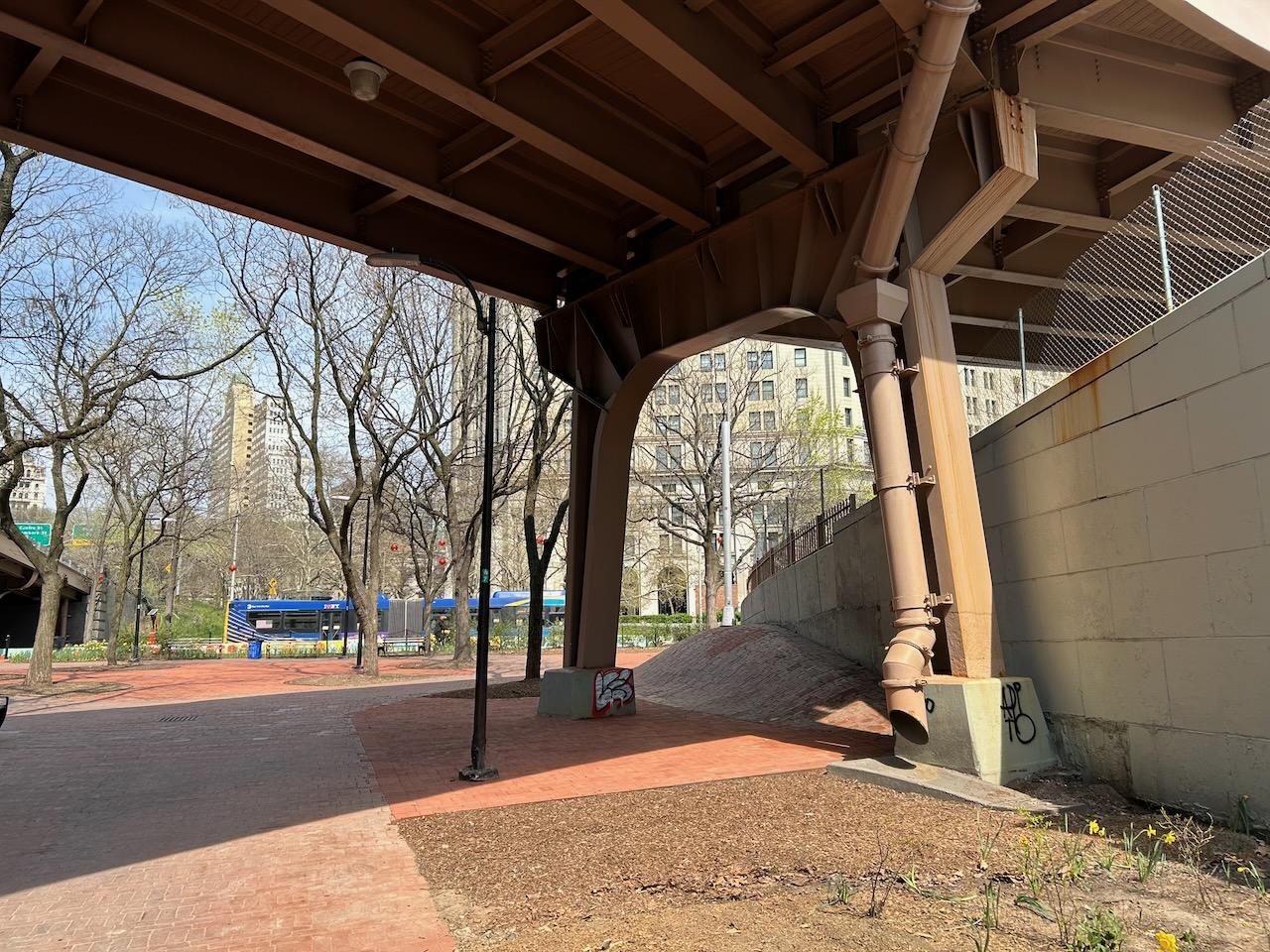
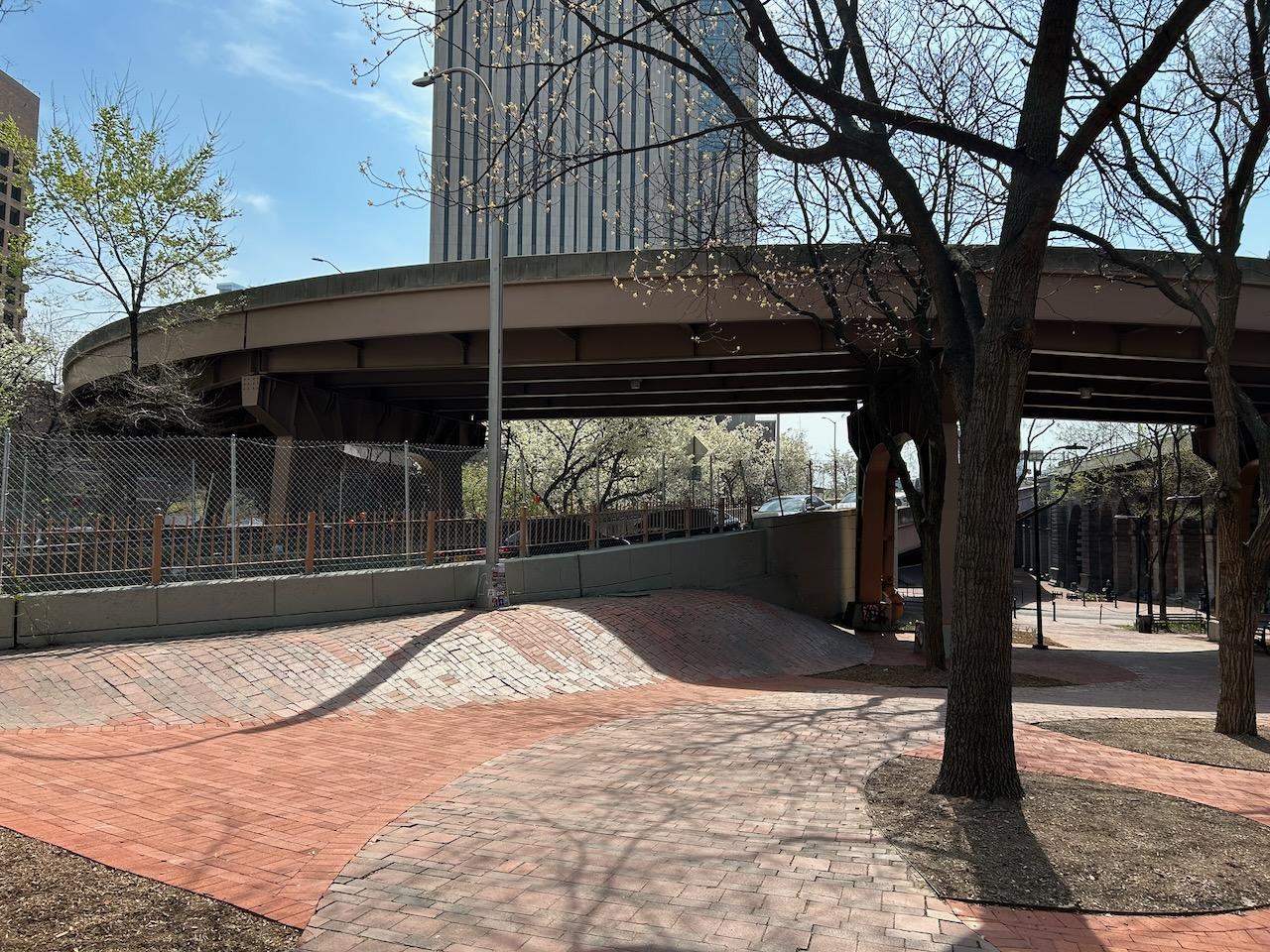
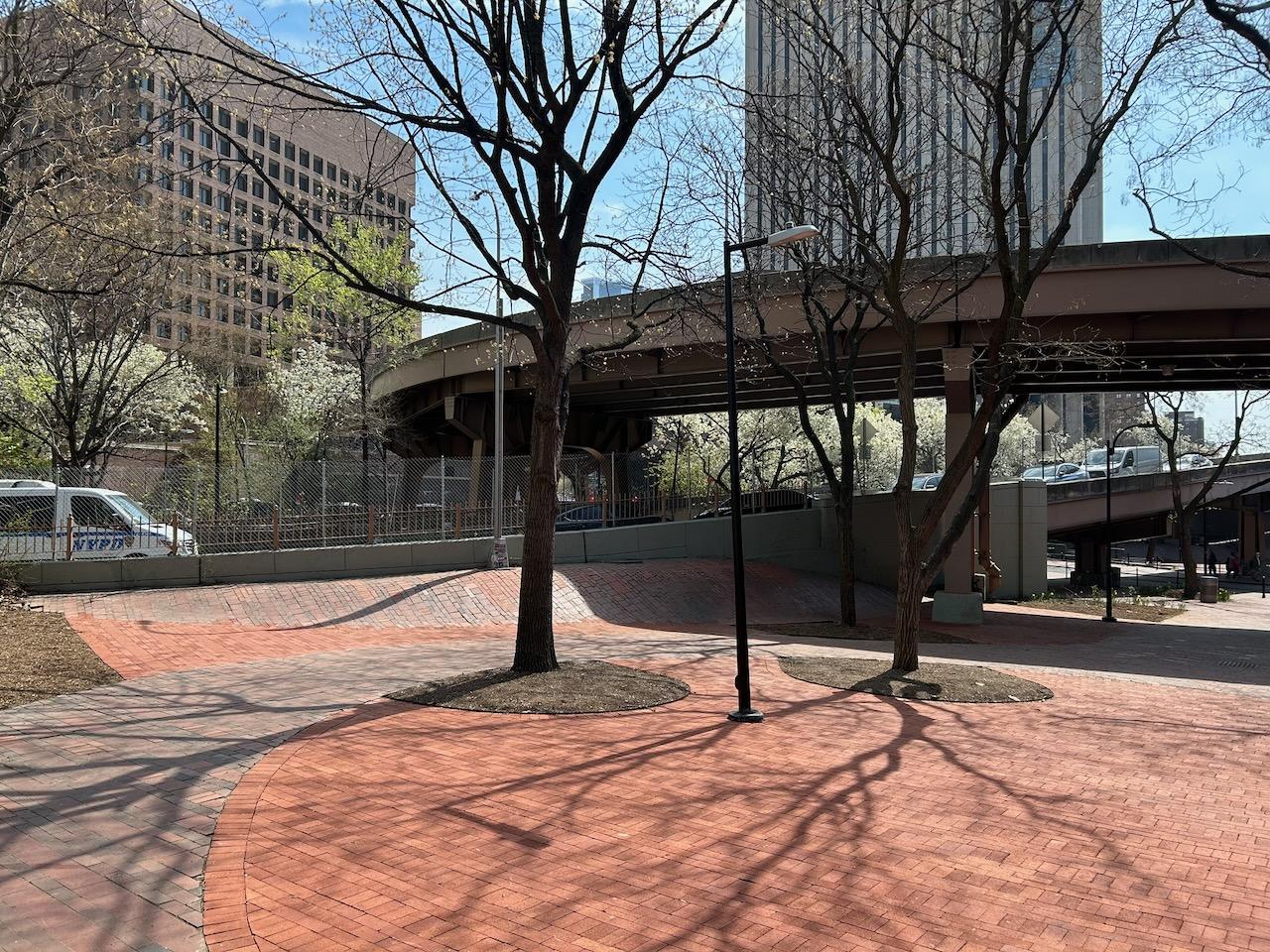
The 2004 renovations sealed the runway in front of the banks off with a perimeter of dirt, mulch and benches. To this day, it looks like it has not been maintained since, and could have easily been a location for the 2007 film, I Am Legend.
Steve Rodriguez, founder of 5Boro skateboards, helped save the remaining portion of the spot from reaching the same sort of fate, as his efforts did not begin until the city had negligently already instated their “beautification” on the most important section of the spot. Through the deal-sealing argument that informed public officials at various hearings to understand that making the Banks unskateable would increase skateboarders throughout various other plazas in lower Manhattan, Rodriguez was able to get the spot designated for skateboarding, in addition to some funding for more skate-friendly obstacles that define the terrain offered at the Banks to this very day.
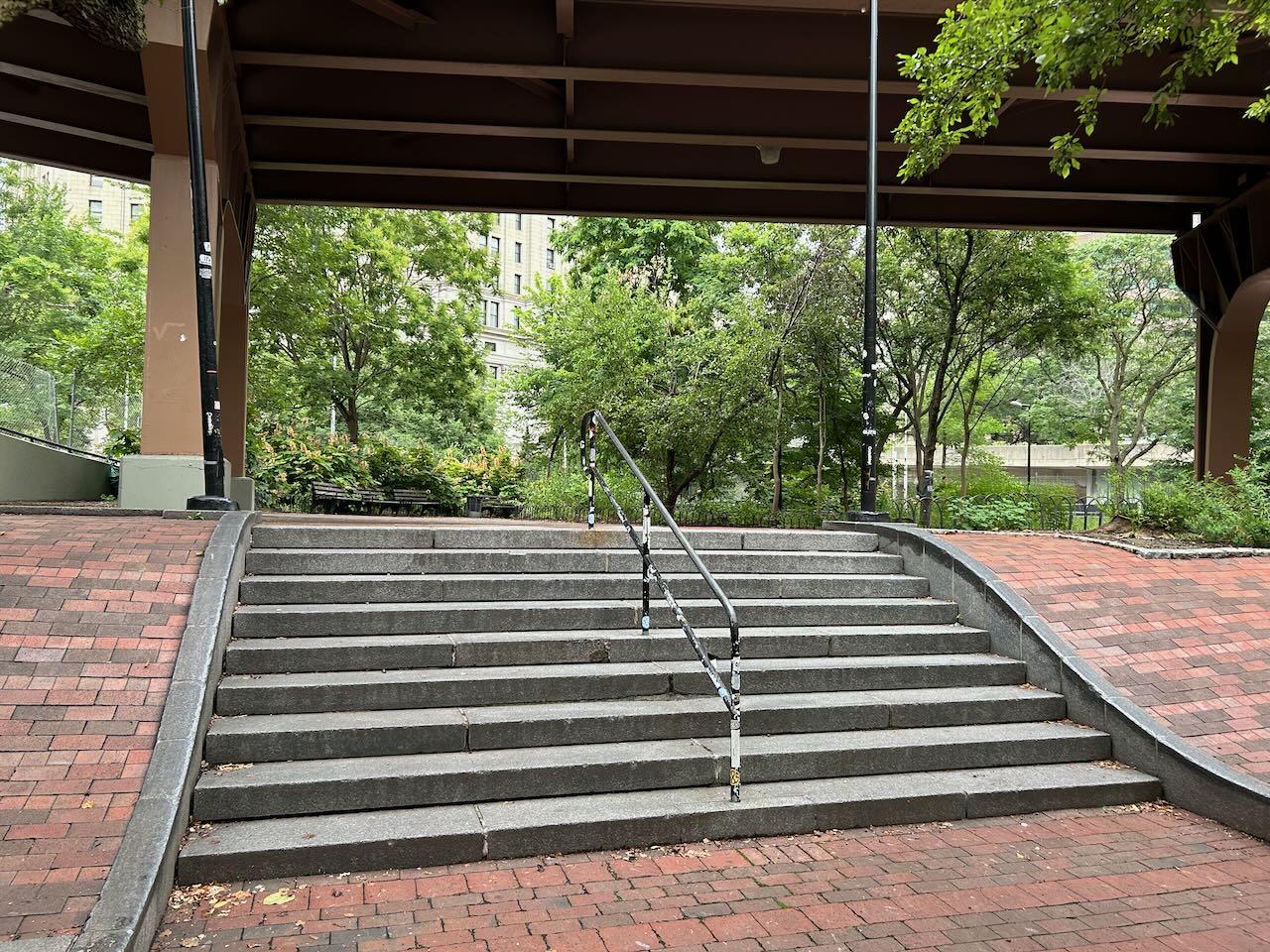
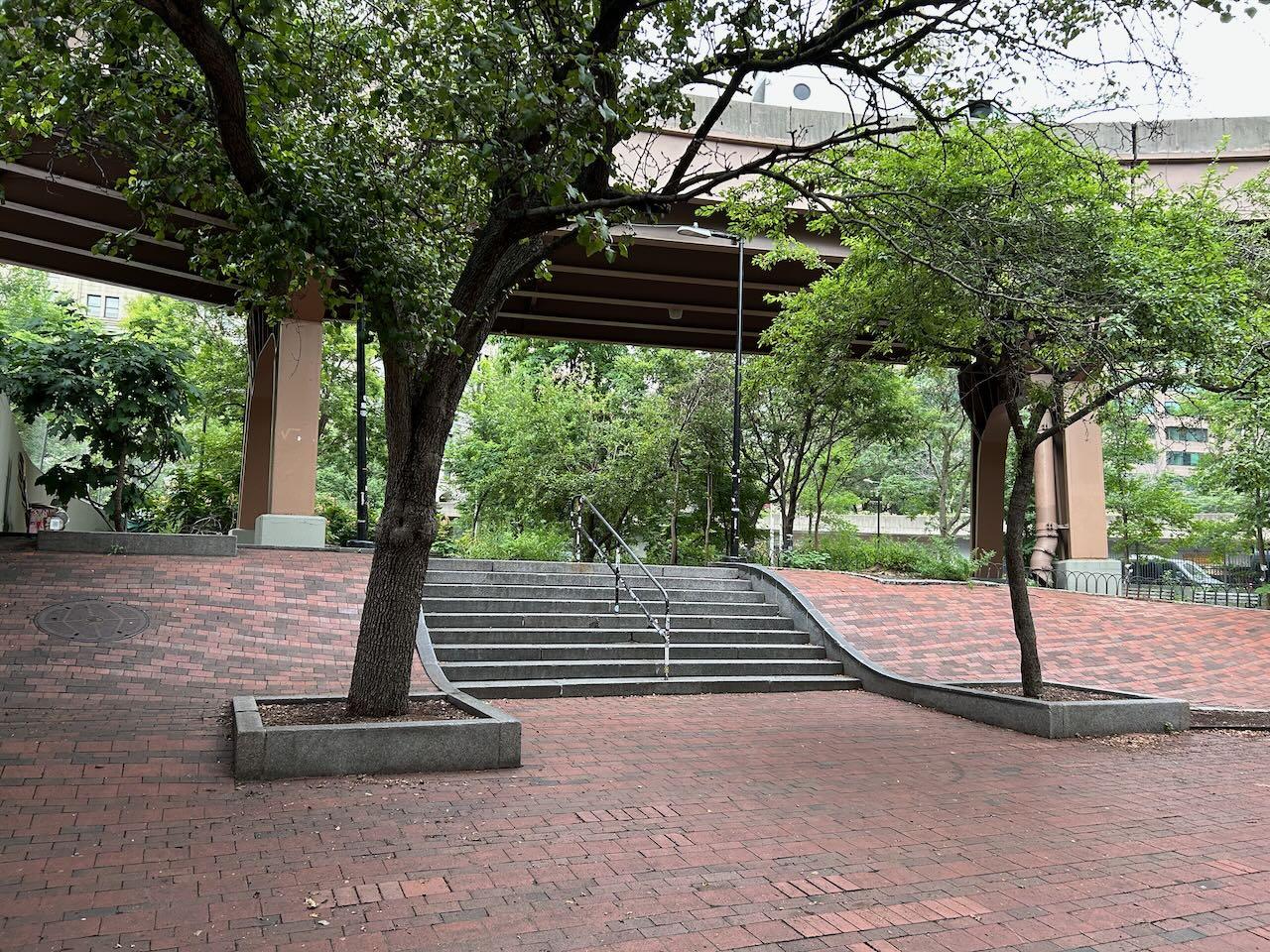
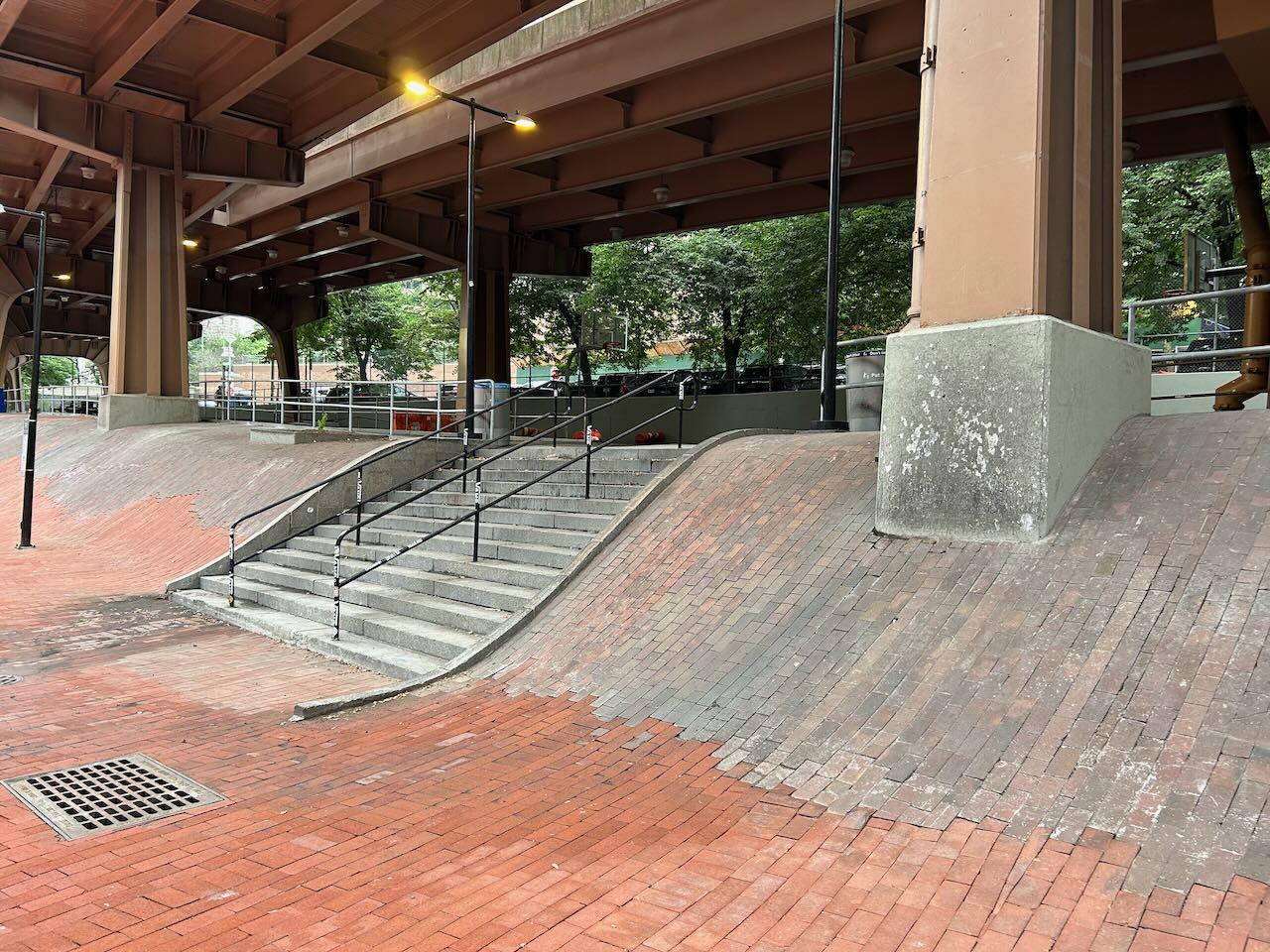
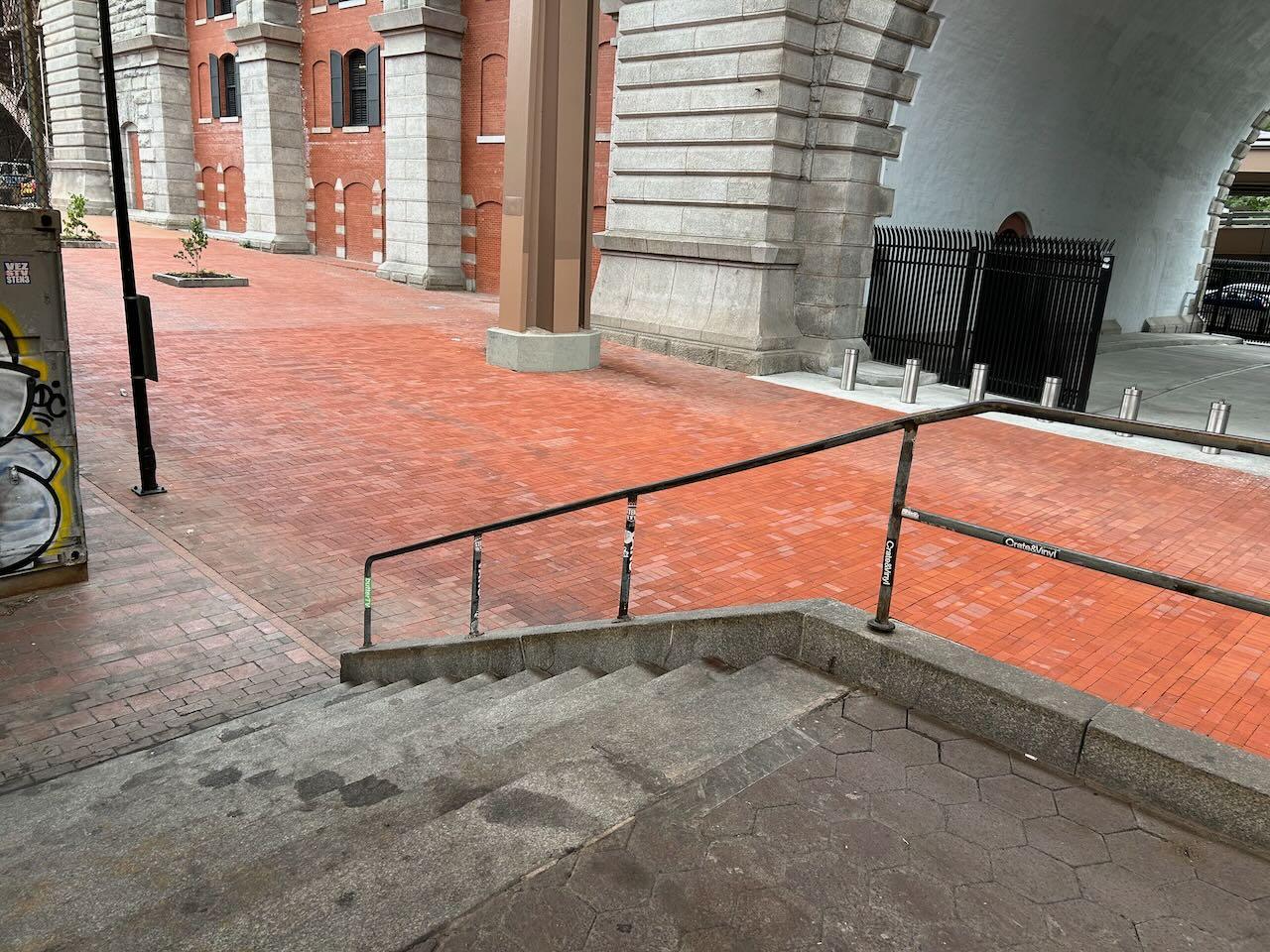
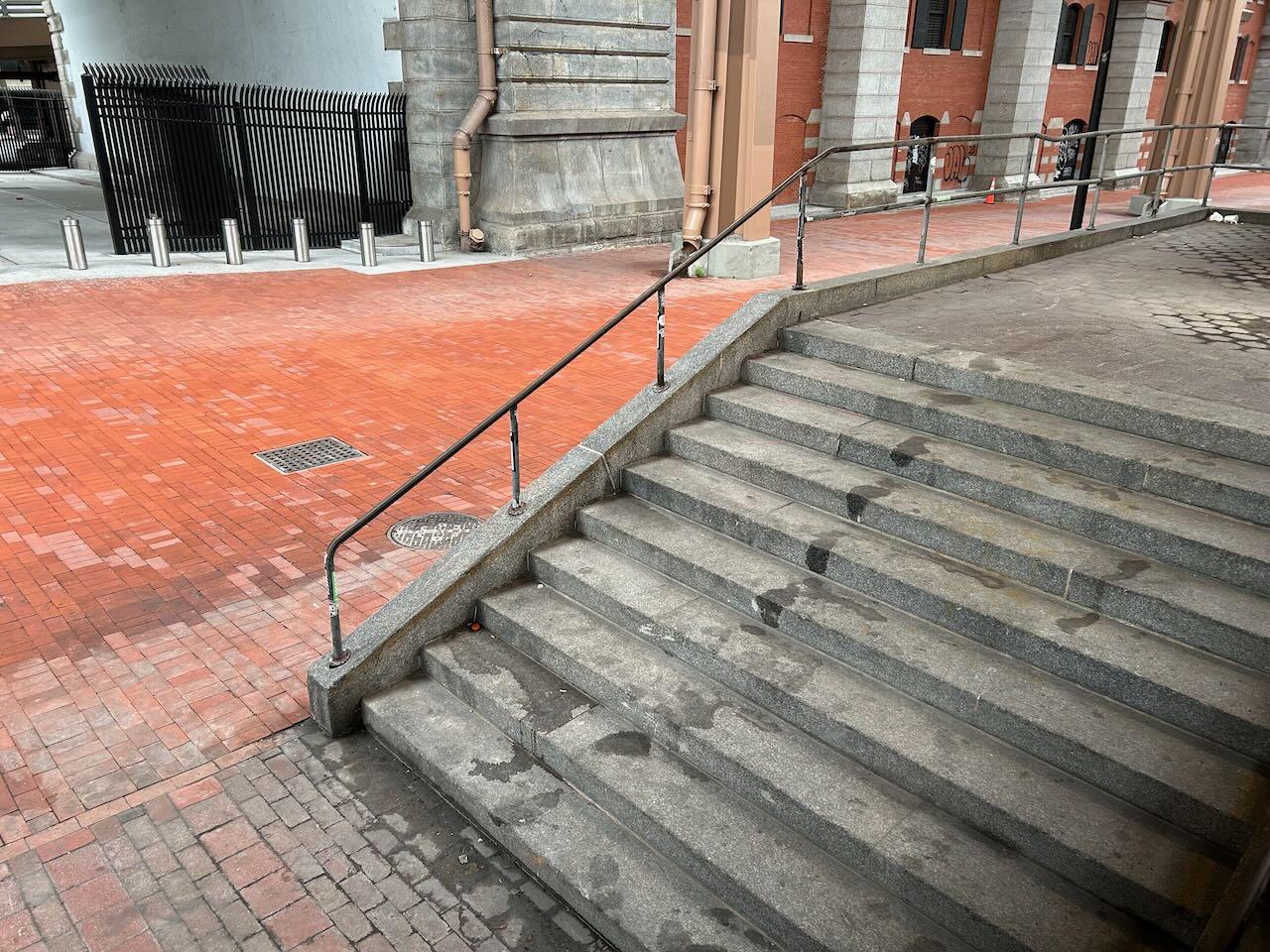
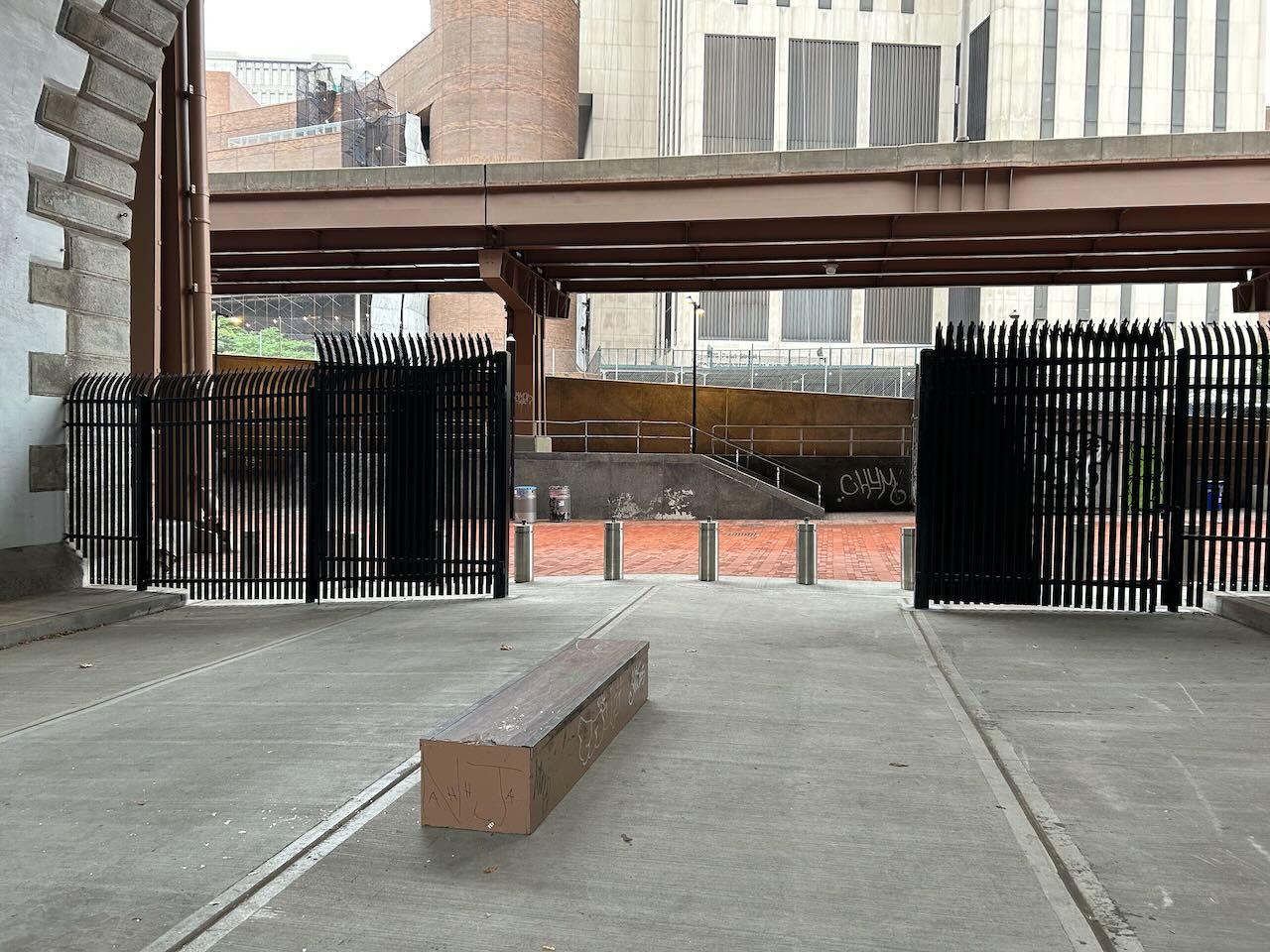
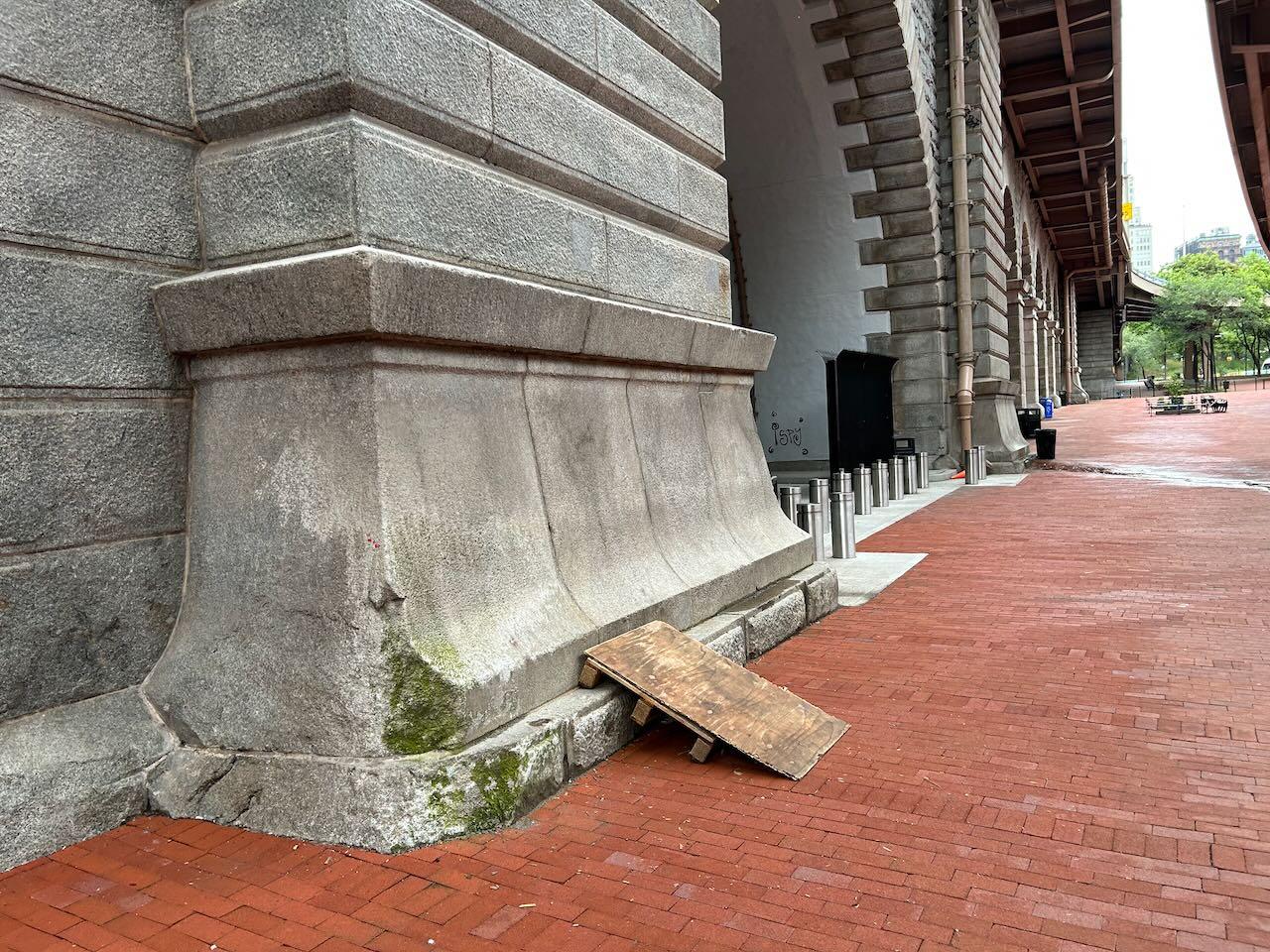
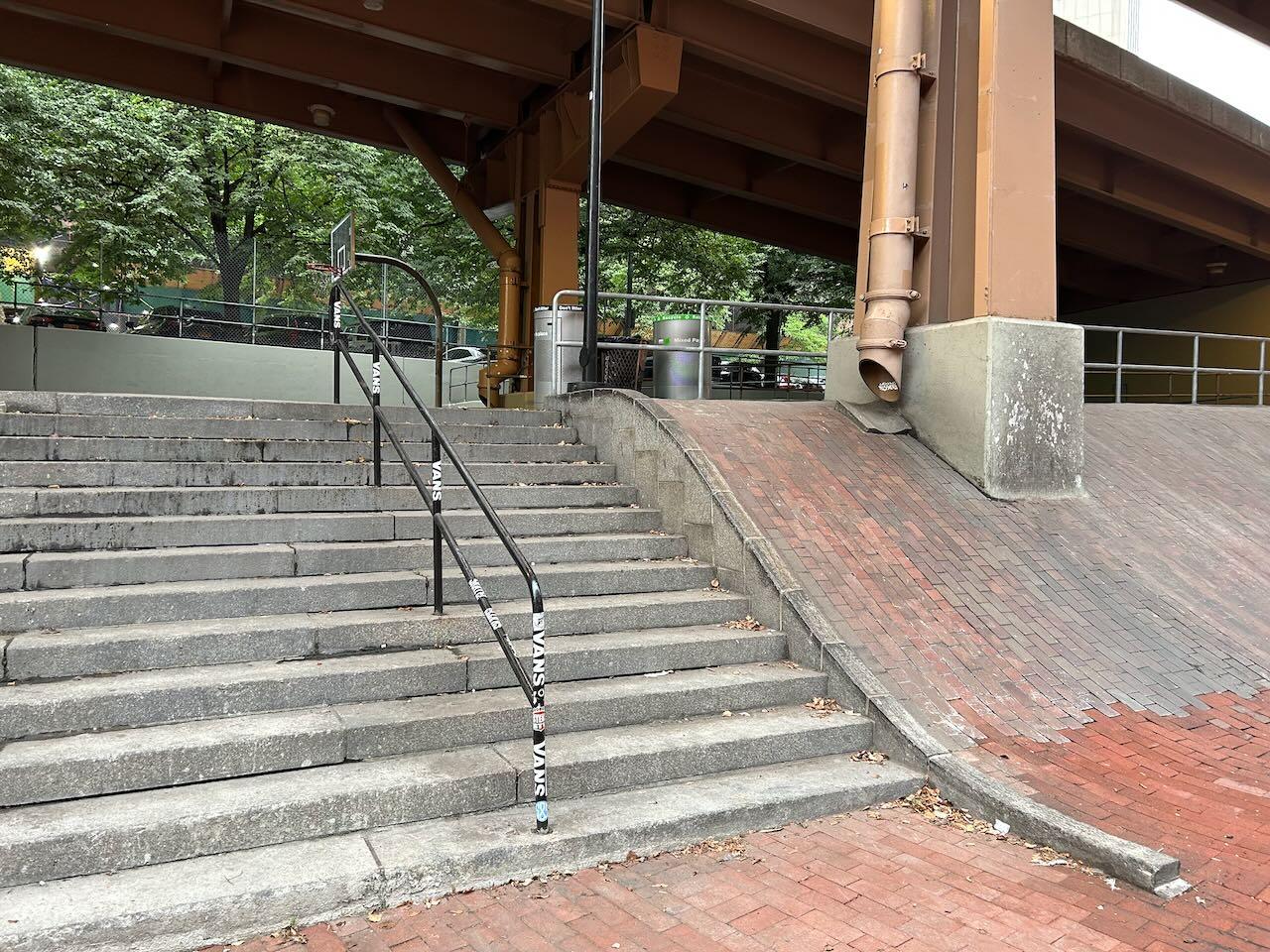
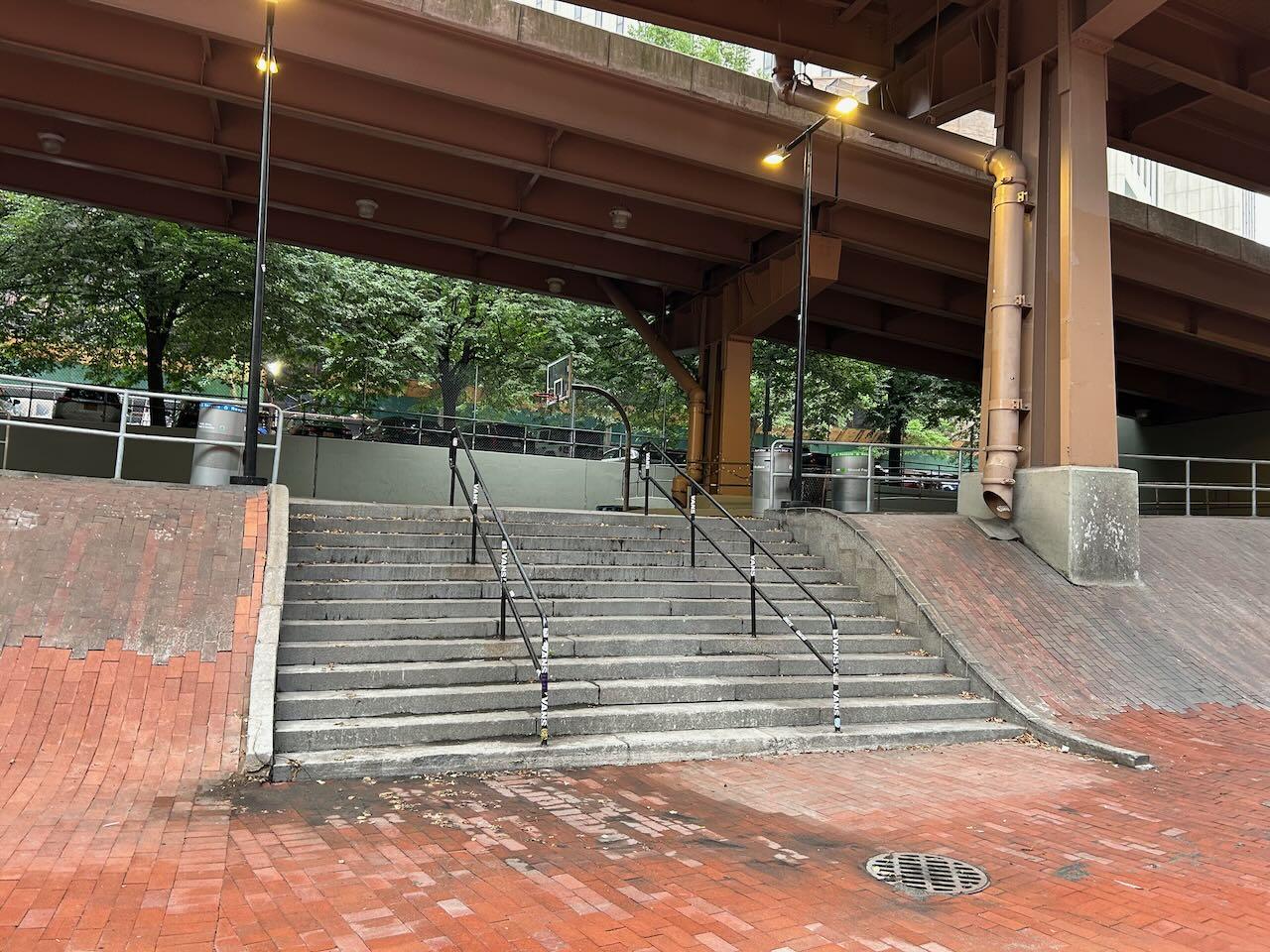
Throughout 2004 and 2005, the planters breaking up sections at the bottom of the big banks were filled in with bricks, in turn, those granite slabs were used to create four-foot-long, foot-and-a-half high ledges, and skate companies (and Red Bull) began sending in the occasional donation for obstacles like angle iron boxes, quarterpipes, flatbars, ledges at the top of the bank, wedge ramps, and other things you would typically find in a skatepark. These tend to last anywhere from one month to one year, but hardly have any sense of longevity as they are constantly abused by skateboards and bike pegs. The nine stair rail was replaced with a higher round rail, as were the thirteen stair rails. The ten remained the same as it always has.
Nowadays, the spot holds a few contests annually on the ten stair rail and the wallrides affixed to the pillars at the base of the big banks (stories exist of contests on the nine throughout the 1990s, but these were seldom documented, and tend to focus more on who got into a fight than they do on actual tricks.) Otherwise, BMXers, weekend warriors, and young kids who voyage out to the spot on a Saturday with a parental chaperone are mainly the crowd that consumes the space. On an average weekday afternoon, it is very likely that you will not see a single skateboard in the place, a far cry from the spot’s dominance of any 1990s New York video part’s screentime, and the images that made Ari Marcopolis a name synonymous with nineties downtown Manhattan youth culture.
This is not to say that what remains of the spot today has decreased in quality, for it seems like anyone around fifteen years ago surely would not have written off the opportunity to adopt a box, a wedge ramp, or a quarter pipe to their favorite skate spot. But its decrease in popularity has something to do with the same dynamic that filters out skatepark footage from street skaters’ video parts. There is something fabricated, something marginally inauthentic to what once stood as arguably the most unintentionally perfect skate spot ever made. Sure, if you do not mind the rough ground, and there are not too many BMXers around to take off your head while speeding down an incline or little kids learning ollie fakies for the first time to get in your way, it could be fun. But, like most bits of nostalgia surrounding childhood activities, its modern day incarnation is simply not the same. And you do not necessarily need to have been around long enough to have owned a Zoo board back when Oyola rode for them to recognize that.
Bust — ♦ / Rare: This place is designated for skating, so you’re not going to get kicked out of here.
Location: Parallel to Frankfort Street, under the Brooklyn Bridge on/off ramps between Police Plaza and Pace University. Take the 4, 5, 6, J, M or Z to Brooklyn Bridge–City Hall and skate east downhill on Frankfort Street. Make a left on Pearl Street and the spot is right there.
Pictures (Click to Enlarge):