






(Or how hamburgers remain to be one of the greatest instruments of eating.)
One of the major footnotes to Habitat’s ten-year anniversary video is that it marks a decade since the release of Photosynthesis, the finest skateboard production of the 2000s. It was the video that taught New Jersey what to do with its shoulders when it does a backside nosegrind, gave one final hurrah to Long Island’s seemingly endless allegiance to the swooshy tan cargo pants, and provided a small dent to the ozone layer due to the surge of Philadelphia field trips that proceeded it.
If that is not enough to back up a longstanding cultural impact, the homie from Boil the Ocean summarized the video’s main contributions to the act of skateboarding fairly well: “Van Engelen’s grease-fire ledge attack, Pappalardo’s clockwork precision, Fred Gall with one pants leg up, Danny Garcia demonstrating how to pop out of a backside tailslide, Wenning’s backside nosegrinds and switch heelflips, Josh Kalis doing ‘the’ 360 flip and the walk down into Jason Dill’s bent world, back when he was doing all those 180s the hard way into ledge tricks and settling into New York.”
But skateboarding alone does not make classic skateboard videos, as ironic as that may sound. Before high-speed internet, it took a few years for tricks to get outdated — not to mention the turnaround on editing, production, and shipment of physical VHS tapes that preceded the release of the said tricks. Simply running down a list of maneuvers in a post-millenial video is not enough to surmise it being worthy of the “classic” label, e.g. when was the last time you watched Menik Mati? Once a video reaches ten years of age, the atmosphere and feel of an era gone by is what makes or breaks the chances of you unearthing the tape from its dust jacket. If you find yourself justifying any portion of an older video as “good for the time,” it’s not a classic. The whole thing requires a timeless quality.
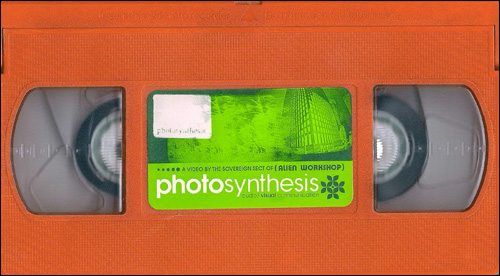
Photosynthesis was one of the last skateboard productions to exhibit the now-rare phenomenon of an entire team gyrating around a single skate spot — something that the recent direction of street skateboarding might not allow to occur again. The fireworks that surround high-exalted memories of “nineties skateboarding” have a lot to do with the vibe that exists when watching footage from certain eras of spots. Pier 7, Embarco, USC, those red curbs in the Plan B videos, Love, The Banks, etc. conveyed that the footage was a by-product of an all-day session, which included sitting around, smoking cigarettes, talking shit, and occasionally coming up with a brilliant line that made its way to your VCR. These sort of environments barely exist anymore, outside of makeshift spots, skate parks and Europe. The closing of the era when Love was the east coast Mecca, before the shitty “renovation,” could not have been better relayed than it was here. It’s infinitely easier to relate to a video that was filmed as an accompaniment to the life of a skate spot, as opposed to one thriving off plane tickets to Shanghai.
Once all the classic spots started to disappear, east coast skateboarding began a relationship with all those who had completed a BFA program, leading us on a post-Static II / post-Mosaic tract of outlying scraps that kids from California call “abstract spots.” It has been the path we’ve stayed on for the past half-decade. This draw to spots-that-don’t-look-like-spots sometimes gets bad-mouthed as an attempt at being too weird for its own good, but really, these places are mostly what we have left to skate. There’s no more Love, City Hall or Brooklyn Banks. Hell, there’s even no more Newport, Red Benches or Verizon Window Ledges, making it only right that the videos themselves reflect that. But it also makes videos like Photosynthesis all the more special for immortalizing a period when we took all of these things for granted, or in some cases, completely missed the opportunity to experience them.
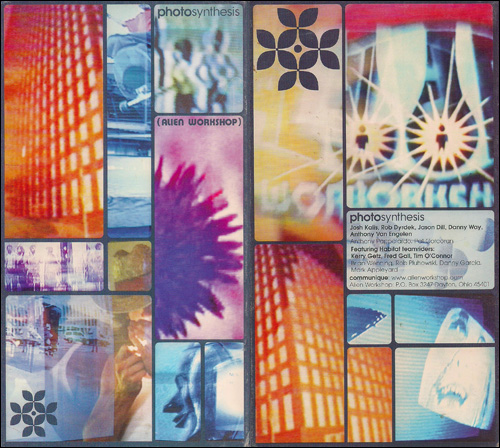
Beyond nostalgia, there’s another reason this thing has held up well, and that’s the editing. While Photosynthesis probably did for college video art programs what All the President’s Men did for journalism schools in the late-seventies, something that often gets disregarded about all the expected non-sequiturs in this video is the discretion with which they are used. It’s two teams, thirteen skaters, equalling an optimal thirty-three minutes. The only blemish on the video’s runtime is Dyrdek’s private park session, and it’s not even an artsy off-shoot. Pluhowski’s and Corcoran’s forty-five seconds of footage are each…forty-five seconds of footage. With Mind Field, Dill’s minute of footage became two-and-a-half minutes. Jake’s two minutes of footage got slowed out and art-ed up to a four-minute duration. (Obviously, this is not strictly a 2009 tendency, Memory Screen had the same issue, but Memory Screen is only like half a skate video, and seemingly half of what looks like an attempt at simulating an unlikely dependence on hallucinogenic drugs.)
Skateboarding looks best when it’s fast. Done fast, edited fast, and there’s no reason to slow a part down to a crawl with the assistance of some song begging “art” to accompany it, just for the sake of overdoing a brand image. Apparently, there is some logic behind the idea of glowsticks or robot mice needing to be in between every two skate tricks, but it disregards the necessary function of skate videos altogether, and that is making the viewer want to get up and skate. “Video art” and good pacing can co-exist if they have to, and Photosynthesis will forever be proof of that.
With all that being said, this video captures a time when Dyrdek still somewhat cared enough to do a back 180 nosegrind revert that looked like a flawless backside 360 that just so happened to incorporate a ledge because it could. A time when Fred Gall did varial heelflips and Appleyard skated Philly. Plenty of videos are full of things that will never manifest themselves in professional skateboarding ever again, it is just that this one happens to have more gold moments than the rest.
These scans are from the visual treasure trove over at the The Chrome Ball Incident. There is a directory of links at the bottom of this post that you may find of some interest.
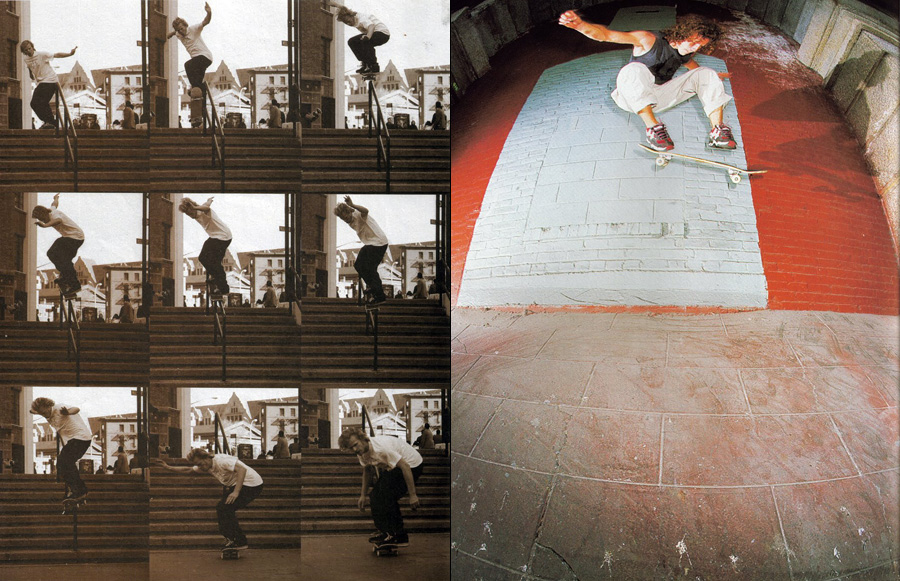
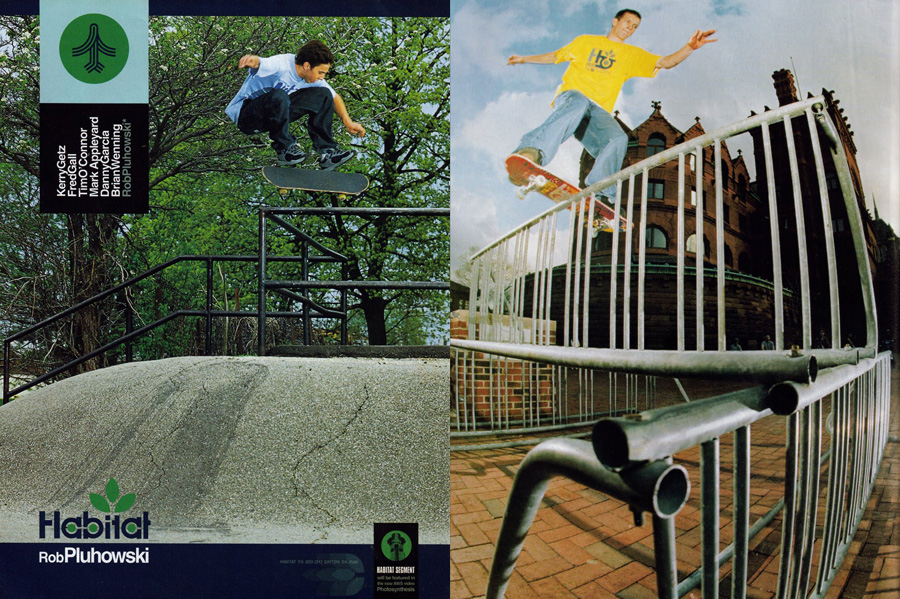
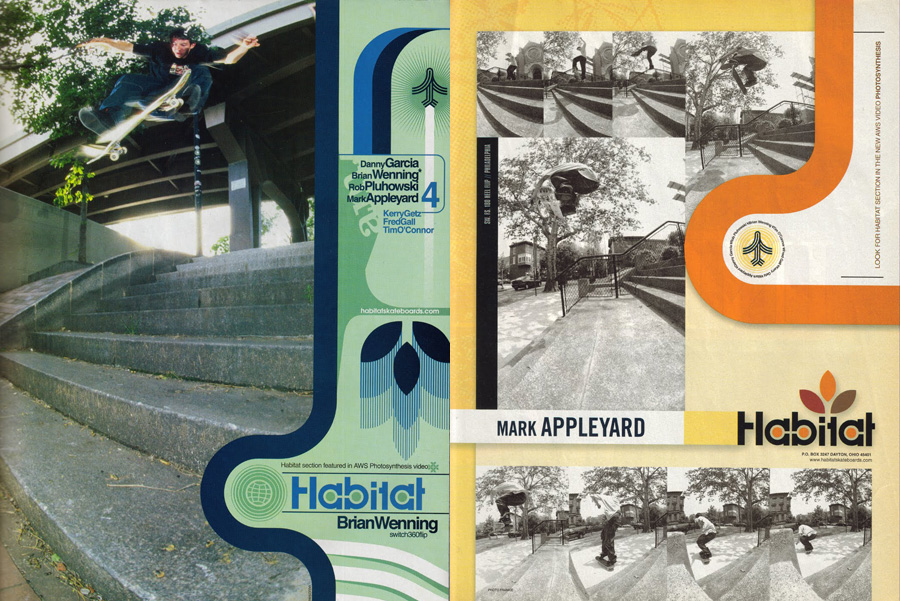

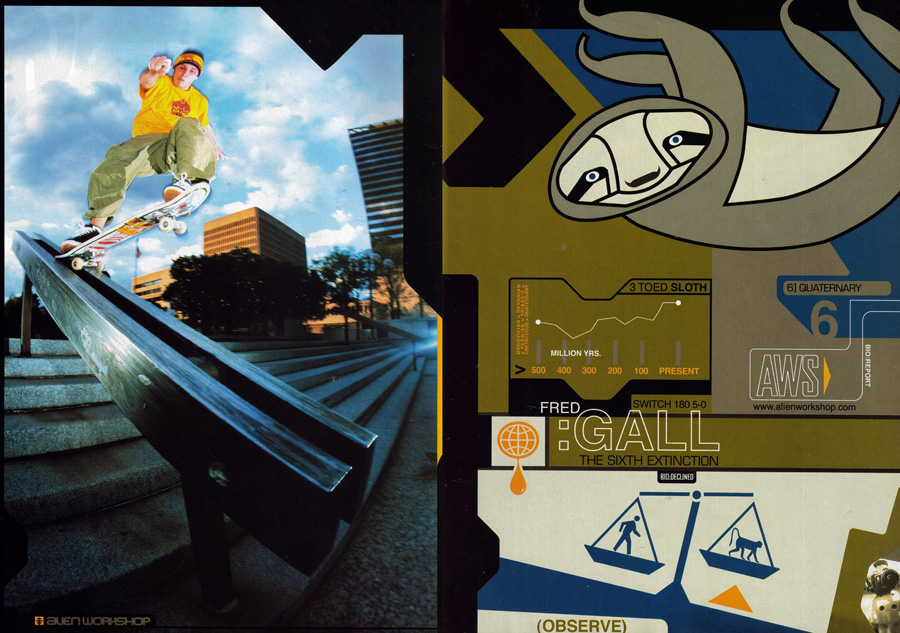
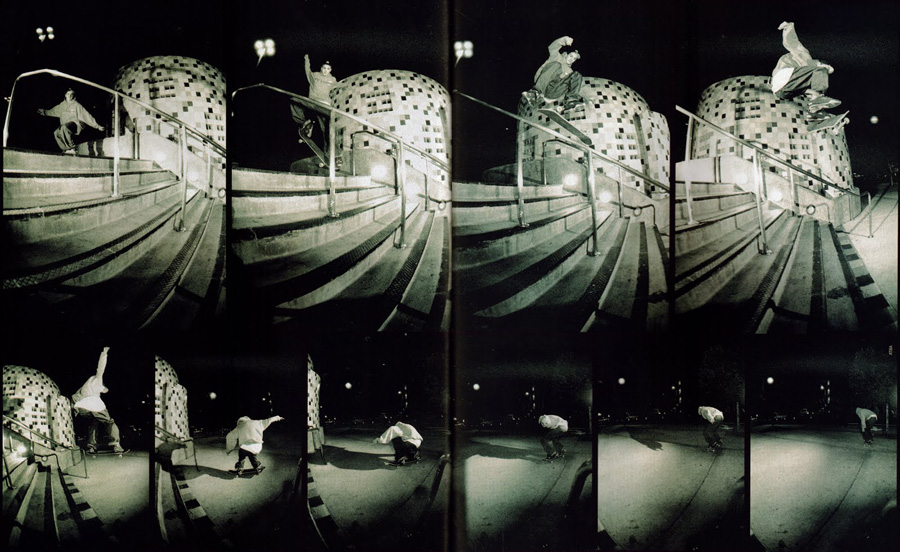
This commercial is a pre-Photosynthesis (but same era) video bit of a young Wenning and a young Pappalardo in their mythological sleeping at Newport days. Should be on here.
A useful list of Photosynthesis-related Chrome Ball filters:
» Anthony Van Engelen
» Anthony Pappalardo
» Rob Dyrdek
» Kerry Getz
» Mark Appleyard
» Fred Gall
» Rob Pluhowski
» Tim O’Connor
» Brian Wenning
» Josh Kalis
» Jason Dill
Well there goes my morning
more fluf, huh
Best Post EVER!
Epicly epic epicness Photosynthesis defintly a timeless classic
this video is so good. i’m remember everyone in where i’m from in la getting lynx or vitas after this dropped. about the red tape though, mine was orange. were there two different releases?
Nah, it just scanned looking red and I neglected to color correct it. Fixed now though.
AWS went way down hill.
quartersnacks made my favorite aws video
If I am not mistaken, were kenny reed and jake rupp almost on habitat? That would have changed that video and changed the static videos indefinetly. I could not be more proud to be a skateboarder at that time.
Thank you!
Best read and so many things on it so on point!
Btw, Photosyntesis casettes came in yellow in Europe. In case you didn’t know.
marquez is the truth in the kitchen.
I never gave a shit about that video (except for AVE’s and Kalis’ parts), but yeah, lots of this is on point.
Ah man, this article brings back so many good memories.
The content posted on this site is incredible – skateboarding written about and documented intelligently. Word is bond…
Big up all the way from South Africa.
!
i vibe people out at DQM
this video brings back a lot of memories. still love you alien.
Thank you. Kosta; the great white hope.
dude. you fuckin’ went in on this one.
Why Pappalardo’s name was spelt Poppalardo in so many old videos…
http://hellatrill.tumblr.com/
Finally. Next best thing to a Flipmode comeback. You should re-upload the disabled audio video to Vimeo though.
how many more essays can u write about photosynthesis???? that shits in the past nigga. u aint never gonna see a pluhowski part ever again if u like it or not. deal with it. oh yeah and no more pre tattoo wenning footage neither so lace ur gravis and throw on ur 3d glasses cuz skatin aint never gonna be wat it was. run and tell that homeboy.
i would stave were it not for marquez’s cooking
Good post.
Makes me want to buy a VCR.
Miss that era so much.
Photosynthesis: http://cgi.ebay.ca/ws/eBayISAPI.dll?ViewItem&item=110683335589
Habitat Mosaic: http://cgi.ebay.ca/Habitat-Skateboards-Visual-Presentation-Mosaic-VHS-/110683322666?pt=VHS&hash=item19c53d792a
This was my visual bible back then, and ill be damned if it isn’t still…
So I’m just finding this post now, a full 15 years after. I was broke as fuck in 2000, but I knew Photosynthesis was gonna be a must-have. To this day, it’s the only legitimate skate video I own, ie one that isn’t dubbed off a friend’s tape.
This vid was fucking legendary. I watched it over and over, studying those lines until they were burned into the back of my eyeballs. I spent weeks trying to level up my tres to be just like Kalis. Shit, the interludes and overlays were probably even responsible for me wanting to be a graphic designer. I’m glad to see other folks appreciated it as much as I did.